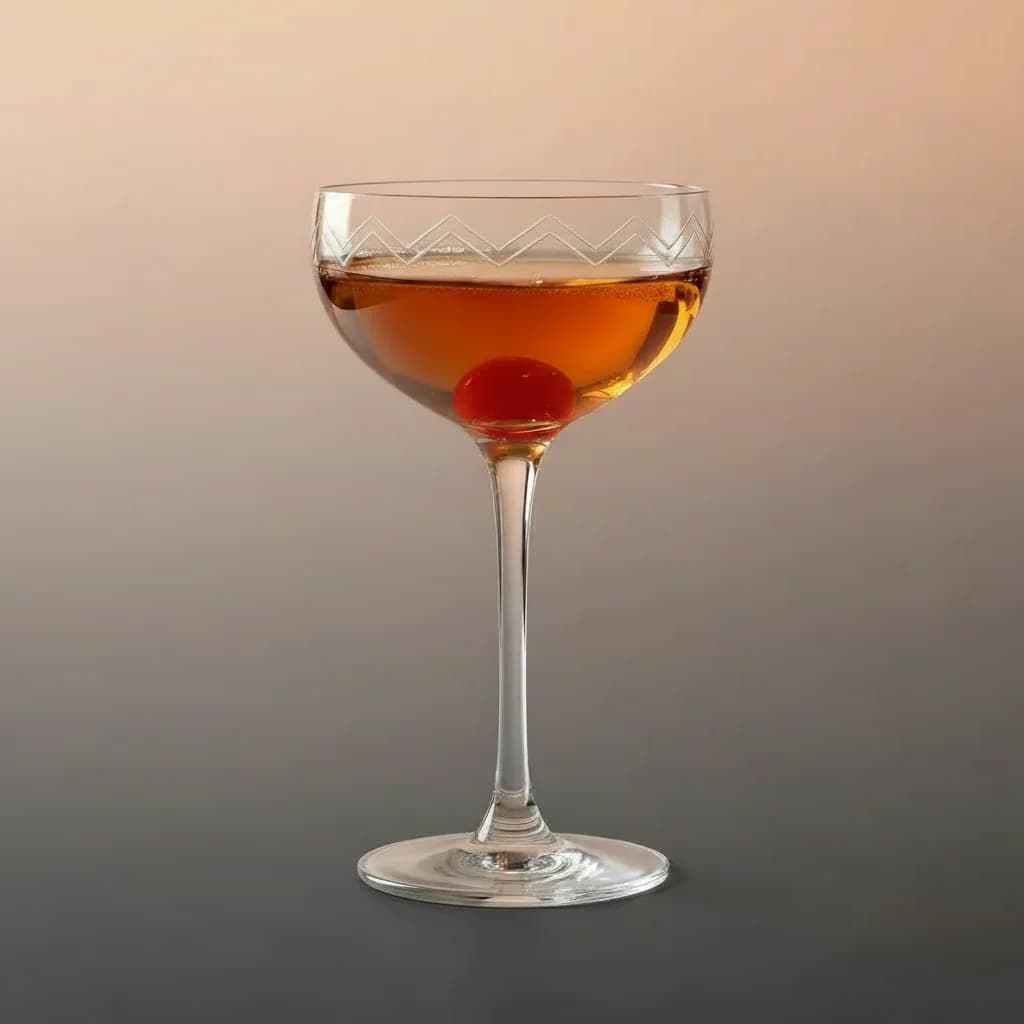
Cocktails with Byrrh
Byrrh is a proprietary French quinquina-style aromatised wine apéritif, made of red wine, mistelle and quinine.
ABV16%
Taste profile
A vinous, fruit-forward red-wine body carries a distinct quinine bitterness, with high aromatic lift and medium residual sweetness that settles into a bitter finish.
How it's used
Stirred or built in a substantial measure, it works as a low-proof, wine-based apéritif on its own or as an aromatic bittering modifier; served chilled and dosed generously, its colour and quinine backbone read clearly in the glass.
Substitutes for Byrrh
Another red quinquina aromatised wine comes closest, since a substitute must keep both the quinine bitterness and the red-wine/mistelle vinous body; residual sweetness can be rebalanced with a little syrup, and the bitterness approximated with a dash of a quinine or cinchona element, though the exact profile differs.
Often confused with
Bitter (vino) aromatised wine
Byrrh, as a quinquina, takes its defining bitterness from quinine (cinchona bark); a bitter vino takes it from gentian. Both sit in the EU 'bitter aromatised wine' category but derive their bitter character from different botanicals.
Americano (aromatised wine denomination)