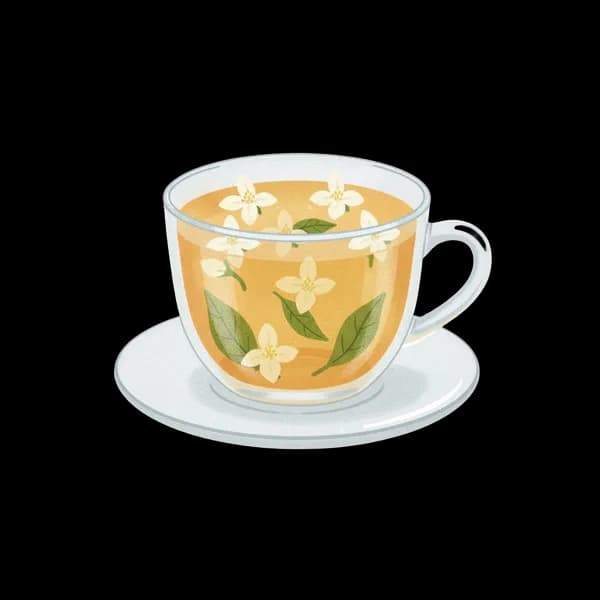
Cocktails with Jasmine tea
Jasmine tea is tea scented with jasmine blossoms.
Substitutes for Jasmine tea
Green or white tea plus a floral syrup rebuilds it in two parts. Plain tea alone gives the body and the tannin and none of the perfume, which changes the drink from floral to simply dry.
Often confused with
Unscented green tea
Jasmine tea is scented, not blended: the leaf is layered with fresh blossom during processing and the flowers are usually taken out again. Adding jasmine syrup to green tea gets close but reads sweeter.
Jasmine pearls
Jasmine pearls carry the same scenting rolled into pellets that open slowly, so the infusion comes on gradually and overshoots less easily. They want more time and reward it, and using them by volume like loose leaf gives a weak brew.
Storage
Dry leaf keeps months in a closed tin away from light, and it loses the jasmine before it loses the tea. Brewed, it wants the fridge and a day or two at most.