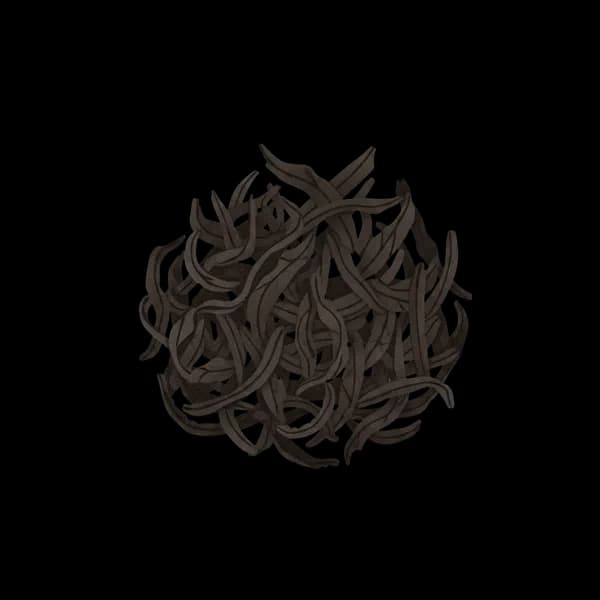
Cocktails with Lapsang souchong tea
Lapsang souchong is a Chinese black tea whose leaves are smoke-dried over a pinewood fire.
Substitutes for Lapsang souchong tea
A few drops of peated Scotch bring the smoke and bring alcohol with it. Smoked paprika or smoked salt in a syrup gets the aroma from a different direction and reads savory. Plain black tea gives the tannin and body and leaves the smoke out.
Often confused with
Unsmoked lapsang souchong
Same tea, same hills, no pine drying — and therefore no smoke at all. It covers the tannin and the body and none of the reason the recipe named it. It is sold under the same name, so the label is your only warning — and a drink built on the smoke will taste of nothing but tea.
Smoked tea blends
Black tea with smoke flavoring added, common and cheaper, and they read acrid rather than resinous; in a delicate drink the difference is obvious.
Description
The intensity is set by distance from the heat and time in the smoke, and "souchong" means the lower, coarser leaf. There is also a version with no smoke at all.
Storage
Dry leaf keeps for months sealed, and it perfumes everything in the cupboard, so store it away from anything else you plan to drink. Brewed, it keeps a day or two refrigerated and the smoke outlasts the tea.