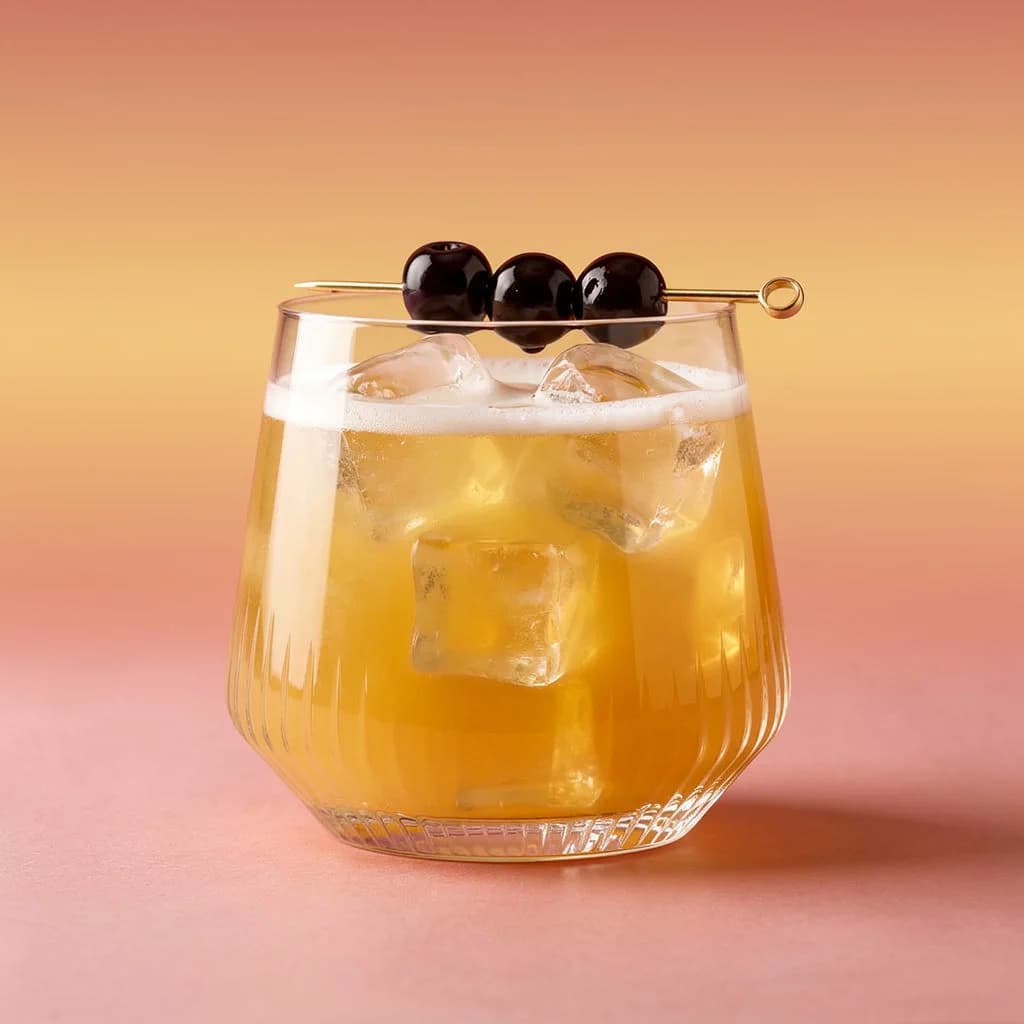
Cocktails with Cask-strength bourbon
Cask-strength bourbon is bourbon bottled at the strength it had in the barrel, with no water added to bring it down.
ABV55–65%Most cask-strength bourbon falls in this range, and a few batches go higher. The exact figure is printed on the label and changes from batch to batch.
Substitutes for Cask-strength bourbon
Any other cask-strength bourbon swaps straight in, whatever the exact figure on its label. Without one, take a bottled-in-bond bourbon and pour about a fifth more to keep the strength. A standard 40–45% bourbon in the same amount gives a softer drink, with a quarter to a third less alcohol from the bourbon. One and a half times as much of a 40% bottle restores the strength but makes the drink bigger.
Diluted before bottling, usually to 40–50%. The law never lets it go below 40%.
Bottled-in-bond bourbon
Always exactly 50% ABV, from one distillery and one distilling season, aged at least four years in wood. The law sets its strength, not the barrel.
Single-barrel bourbon
The words mean the bottle comes from one barrel and say nothing about strength. Some single barrels are cut to standard strength, others are barrel proof.
On the label
Sources
- 27 CFR 5.87 — Electronic Code of Federal Regulations
- 27 CFR 5.143 — Electronic Code of Federal Regulations
- 27 CFR 5.88 — Electronic Code of Federal Regulations
- 27 CFR 5.1 — Electronic Code of Federal Regulations
- Learn the Basics of Barrel Proof Whiskey - Whisky Advocate — whiskyadvocate.com
- What Determines the Proof of Cask Strength Whiskey? - The Whiskey Wash — thewhiskeywash.com
- What is barrel proof bourbon - Boozemakers — boozemakers.com