Cocktails with Orange marmalade
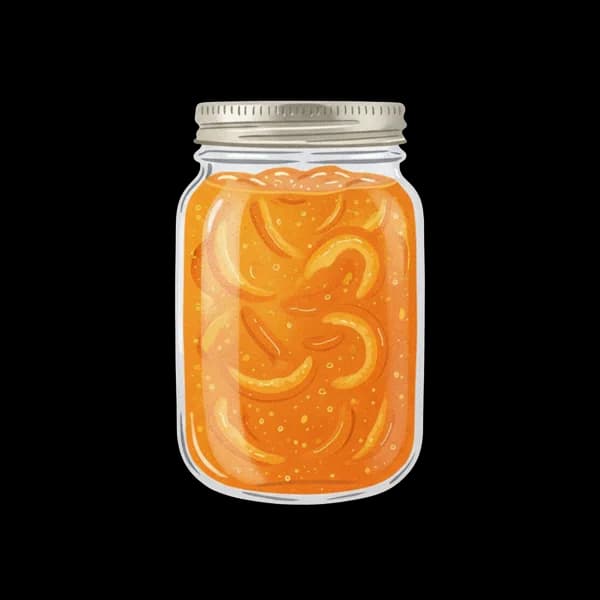
Orange marmalade is a citrus preserve of orange juice and peel boiled with sugar into a jelly-like set, with shreds of peel suspended through it.
Substitutes for Orange marmalade
Three things at once: sweetness, citrus acidity and the bitterness of the peel. A smooth jam gives the first two and drops the third, which is the part a Breakfast Martini is built on.
Often confused with
Citrus jam / fruit jam
In marmalade, pieces of citrus peel are set in jelly, and under EU law it is made from citrus only. Jam is a conserve of fruit pulp with no such peel, and it can be any fruit. Shaken into a drink, jam brings sweetness without the bitter peel edge the marmalade is there for.
Description
It sets because citrus is high in pectin, and bitter Seville oranges are highest of all — which is why they are the marmalade fruit. The suspended peel is what separates it from a smooth jam.
Storage
Keep it refrigerated once opened. The high sugar keeps it stable, but it can grow surface mold over time.