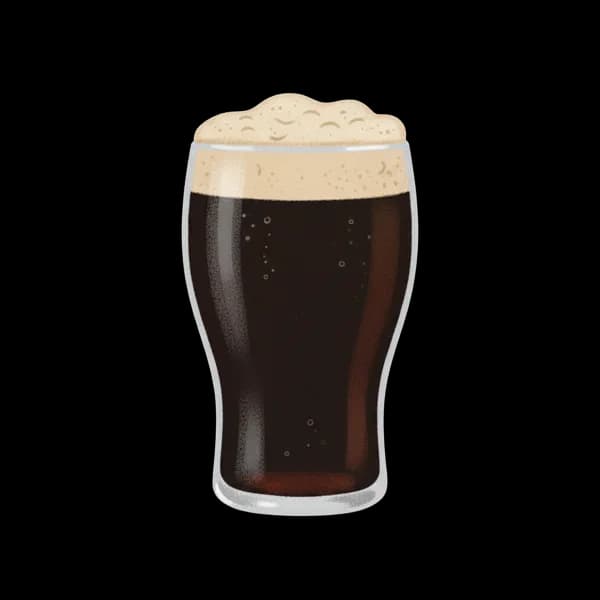
Cocktails with Stout beer
Stout is a dark, heavy-bodied top-fermented ale with a roasted character from roasted barley or malt.
ABV4–8%
Substitutes for Stout beer
Roast, body and a head, and the head is the part nothing else brings. A lighter dark beer keeps all three and turns the roast down; a coffee-based substitute matches the color and the bitterness and pours flat.
Often confused with
Porter
Stout grew out of porter and the two overlap: historically stout meant the strongest porters. The line has blurred since, and for a drink the practical difference is roast — the stout reads drier and more coffee-like, the porter rounder and more chocolatey.
Description
The substyles matter more than the word: dry Irish stout uses roasted unmalted barley for a coffee-like dryness, oatmeal stout adds oats for body, and an imperial runs far stronger and sweeter.
Storage
Opened beer loses its fizz quickly — use it fresh.
