Cocktails with Watermelon
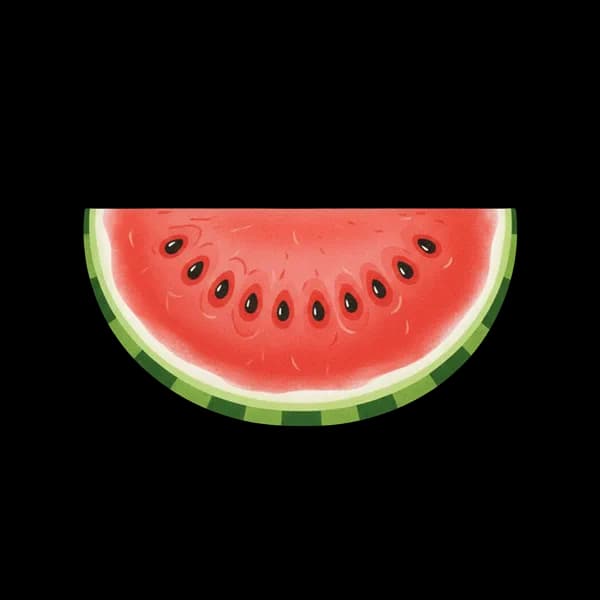
Watermelon is a large, juicy fruit with a very high water content and sweet red flesh.
Substitutes for Watermelon
Anything more aromatic makes a shorter, more perfumed drink in its place. Anything from a bottle has usually been sweetened, so taste before adding syrup.
Often confused with
Watermelon juice, bottled
Usually clarified and often sweetened, and it has lost the fresh top note that makes the fruit worth using: it works as volume in a long drink.
The white rind
Sitting just under the skin, it is firm and faintly bitter, and muddling too deep into it drags that bitterness into an otherwise sweet drink.
Storage
A whole watermelon keeps at room temperature and takes chilling injury in the cold — below about 10 °C the rind pits and the flesh begins to break down. It will not sweeten after picking either, so buy it ripe. Cut flesh keeps a few days chilled. The juice is what will not wait: it separates quickly and turns dull by the next day, so press it to order.