Cocktails with Wine vinegar
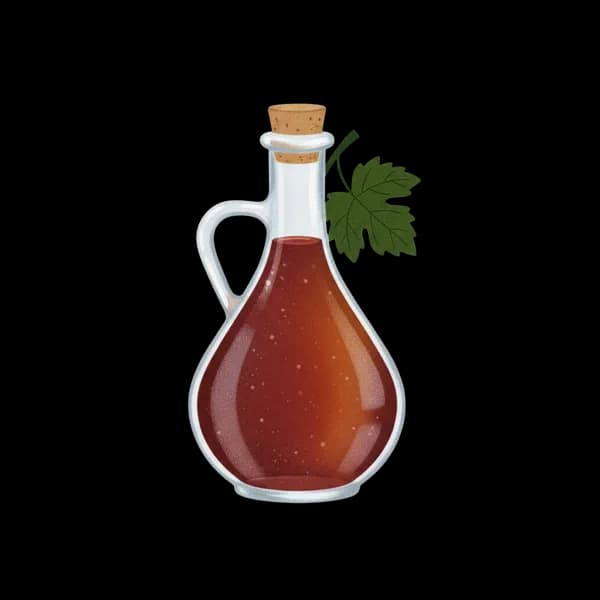
Wine vinegar is vinegar made by fermenting wine, so acetic acid bacteria convert its alcohol into acetic acid.
Substitutes for Wine vinegar
White and red swap for each other; what changes is the color and how loudly the wine shows. Sherry, cider and rice vinegar all sit in the same acid range and will do the job with their own flavor attached. Lemon juice covers the sourness alone and leaves the fermented depth behind.
Often confused with
Balsamic vinegar
Made from cooked grape must aged in wood, so it is sweet and thick; wine vinegar is sharp. It cannot substitute by volume without rewriting the sugar in the drink.
Distilled white vinegar
Neutral and often stronger in acid. It brings the sourness with none of the wine character, which suits a savory build and flattens anything subtler.
Storage
Vinegar preserves itself and an opened bottle lasts years. What can appear is a cloudy jelly-like mass on the surface, the mother, which is harmless and can be strained out or left.