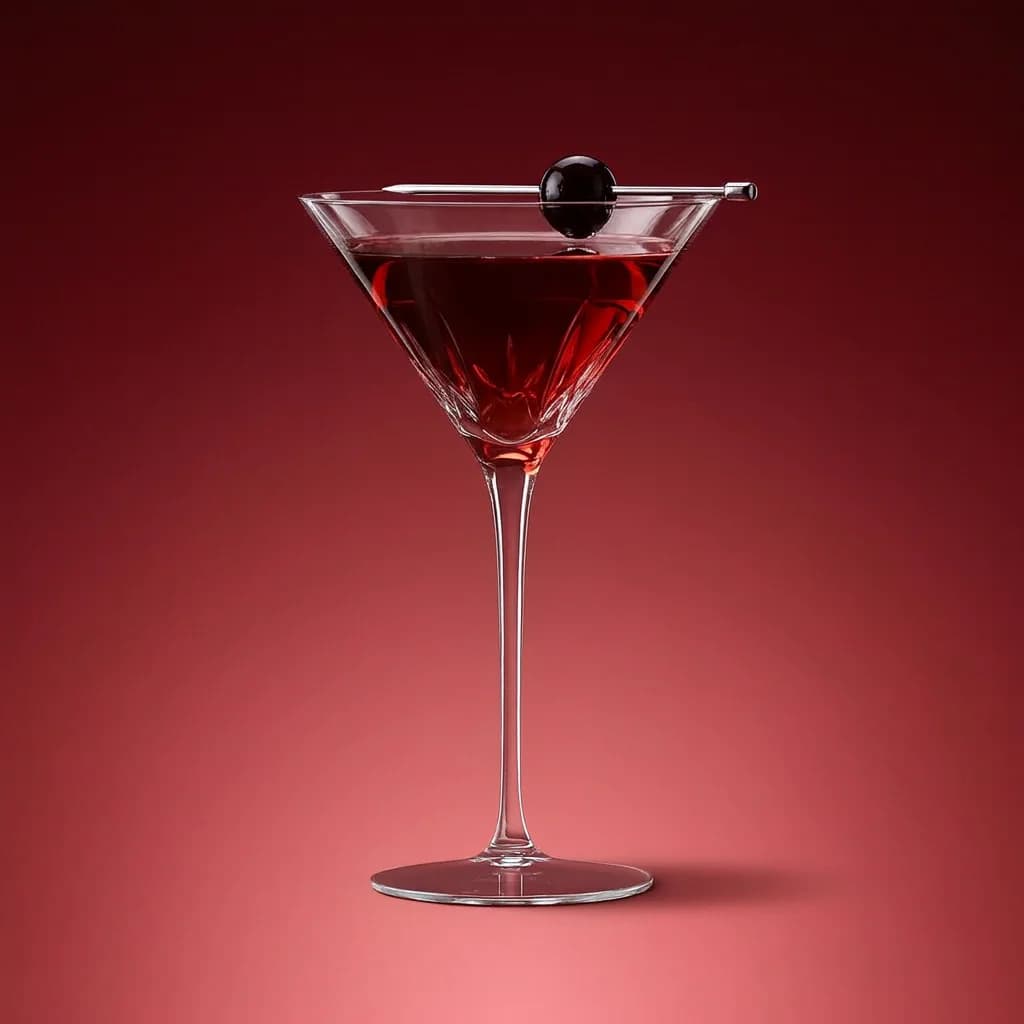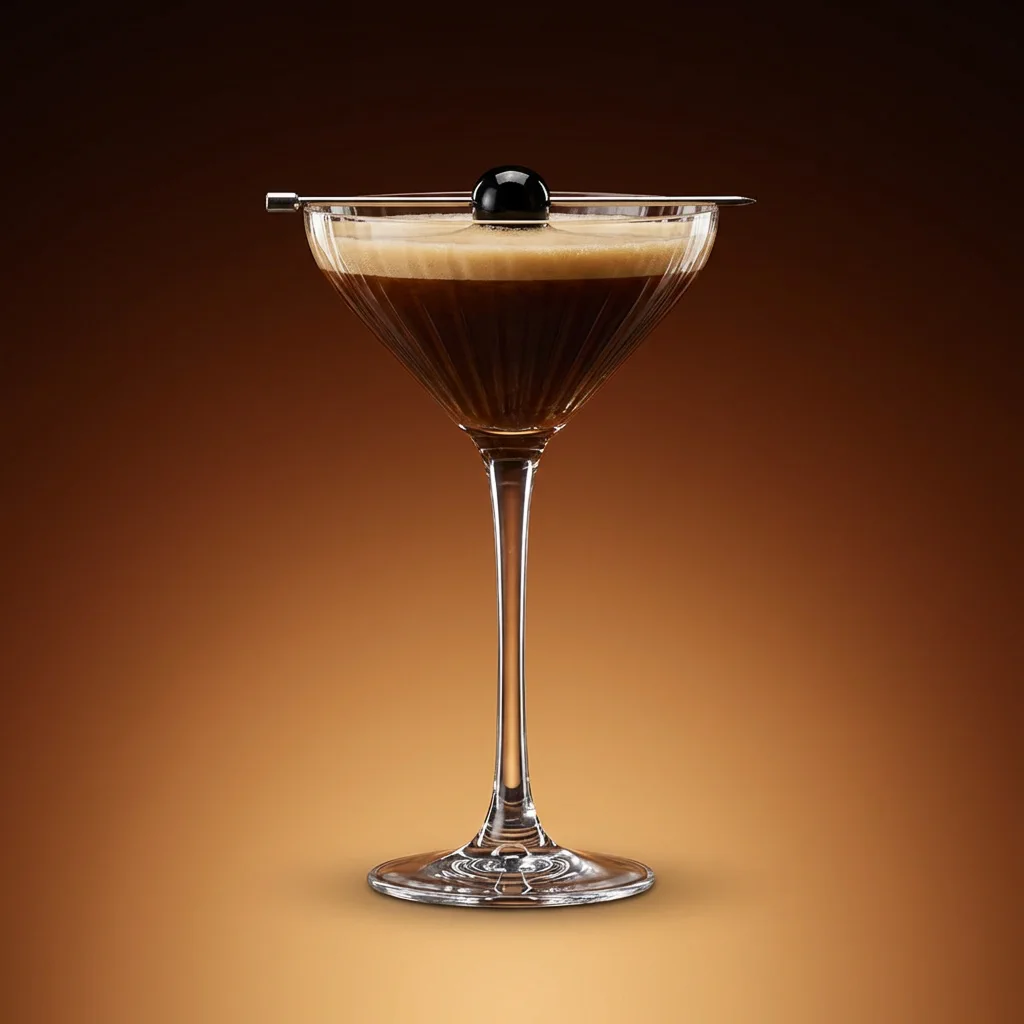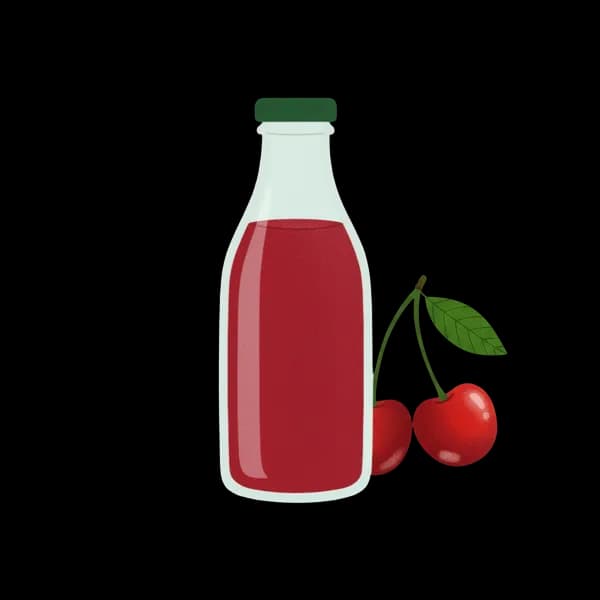
Cherry juice is the unfermented liquid pressed from cherries, the fruit of Prunus trees, spanning both sweet and sour/tart types.
Pronounced cherry aroma over a deep red juice; the sweet type runs rounder and sweeter with soft acidity, while the sour/tart type is markedly sharp and less sweet.
Contributes cherry aroma and a deep red colour as a fruit modifier, ranging from a small accent splash to a larger bulk measure that defines the drink. Much retail juice, especially the tart type, is sold as concentrate or 'from concentrate' — the concentrate is far more intense in acidity, colour and Brix, so it must be diluted or dosed sparingly.
As a defining base or bulk measure it is essentially not substitutable, since the cherry aroma cannot be reproduced from an unrelated fruit; as a small colour or accent splash another red fruit juice works, adding sugar or syrup to match sweetness and, when replacing the tart type, a separate acid such as citrus to restore its sharpness.
Sweet cherry juice vs sour/tart cherry juice
Sweet cherry juice (Prunus avium) is higher in sugar and lower in acidity, giving a rounder, sweeter, less sharp juice; sour/tart cherry juice (Prunus cerasus, e.g. Montmorency) is distinctly acidic and lower in sugar. In a drink these behave differently: one contributes mainly sweetness and colour, the other contributes acidity as well.
Cherry juice vs cherry syrup/grenadine-style cordial
Cherry juice is pressed fruit juice with no added sugar (when sold as 'juice'); a cherry syrup or cordial is a sweetened, concentrated preparation with far higher sugar and viscosity, contributing body and sweetness rather than fruit acidity.
Cherry juice is obtained by pressing the edible part of the fruit, either sold directly pressed or reconstituted from concentrate with water added back to the water removed during concentration. As a class it covers two distinct fruits — sweet cherry (Prunus avium) and the more acidic, lower-sugar sour/tart cherry (Prunus cerasus), of which Montmorency is the common variety and the type most often processed into juice. When sold as 'fruit juice' under EU law, the directly pressed product carries no added sugar and only fruit-derived flavour, pulp and cells from the same species restored to it.
Fresh-pressed juice with no added sugar or preservatives is perishable and prone to fermentation once opened; refrigerate and use promptly.