Cocktails with Melon
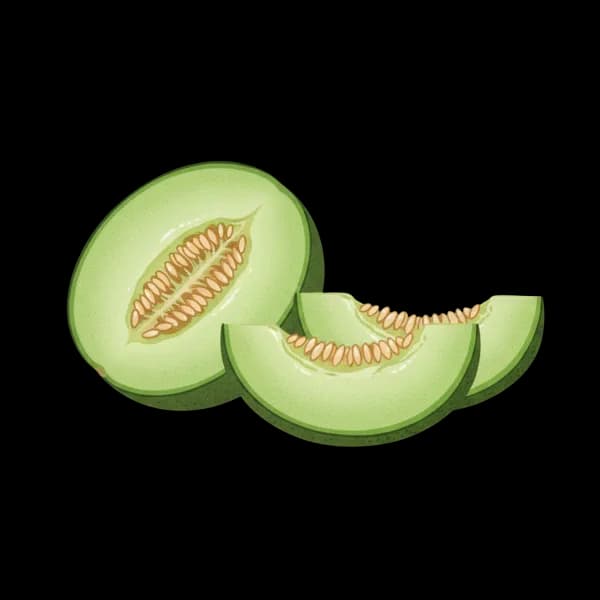
Melon here means the sweet aromatic melons — cantaloupe, charentais, honeydew — used in the bar as juice and as flesh. Watermelon is a different plant and a different job.
Substitutes for Melon
Cantaloupe, honeydew and charentais trade places at the same weight; bottled melon nectar works too, though it arrives sweetened, so cut the syrup and keep the lime. The perfume is the part that does not transfer. A more aromatic fruit shortens the drink and changes its character; a bottled product has usually been sweetened, so taste before adding syrup. Lime is required either way.
Often confused with
Watermelon
A different plant. It has an aroma of its own but not the esters that make a muskmelon smell perfumed, and its water content is barely higher. A drink named for melon becomes a different drink with it.
Melon liqueur
Sweet, bright green and alcoholic, measured in milliliters rather than handfuls; a recipe that named fresh melon wanted the water and the delicacy, and the bottle has neither.
Storage
Buy it ripe. No melon grows sweeter after picking — once the fruit leaves the vine its sugar is fixed. Texture and scent do go on changing: both cantaloupe and honeydew soften and develop aroma off the vine, and the trade ripens honeydew deliberately with ethylene before it reaches a shop. Once cut, wrap it closely and refrigerate, and use it within three to five days. Cut melon picks up other smells quickly, and a badly wrapped half will make the drink taste of whatever else is in the fridge.