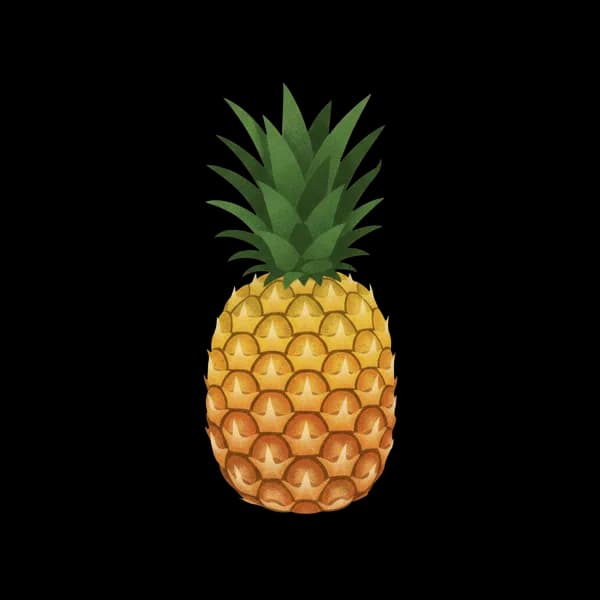
Cocktails with Pineapple
Pineapple is a sweet, tart tropical fruit, and it goes into drinks two ways: as juice and as muddled or blended flesh.
Substitutes for Pineapple
Good pasteurized juice keeps the flavor and the sweetness and gives up most of the foam, a trade nearly every recipe can live with. Mango or passion fruit will take the tropical part and bring no head at all. Where the drink was built around the texture — most of tiki, anything meant to arrive with a collar of foam — no other juice does the job.
Often confused with
Canned pineapple juice
The heat of processing takes nearly all the foam with it. What is left is a sweeter, rounder juice that will sit beside cream without thinning it, which is more than the fresh juice can be trusted to do.
Pineapple purée
The whole flesh blended rather than strained, so it is thicker and carries more of the fruit per measure, and purée gives a drink body; juice gives it length.
Storage
Keep a whole pineapple on the counter, not in the fridge: cold does not improve it, and below about 7 °C it takes chilling injury. It will not grow any sweeter after picking either — what happens on the counter is that it softens and smells stronger, not that it sweetens. It is ready when the base smells sweet, and the base is also the sweetest part of the fruit, so if you only need half, cut it lengthwise, not across. Cut flesh keeps three or four days, covered and cold. Juice to order: fresh juice starts separating within the hour and does not keep.