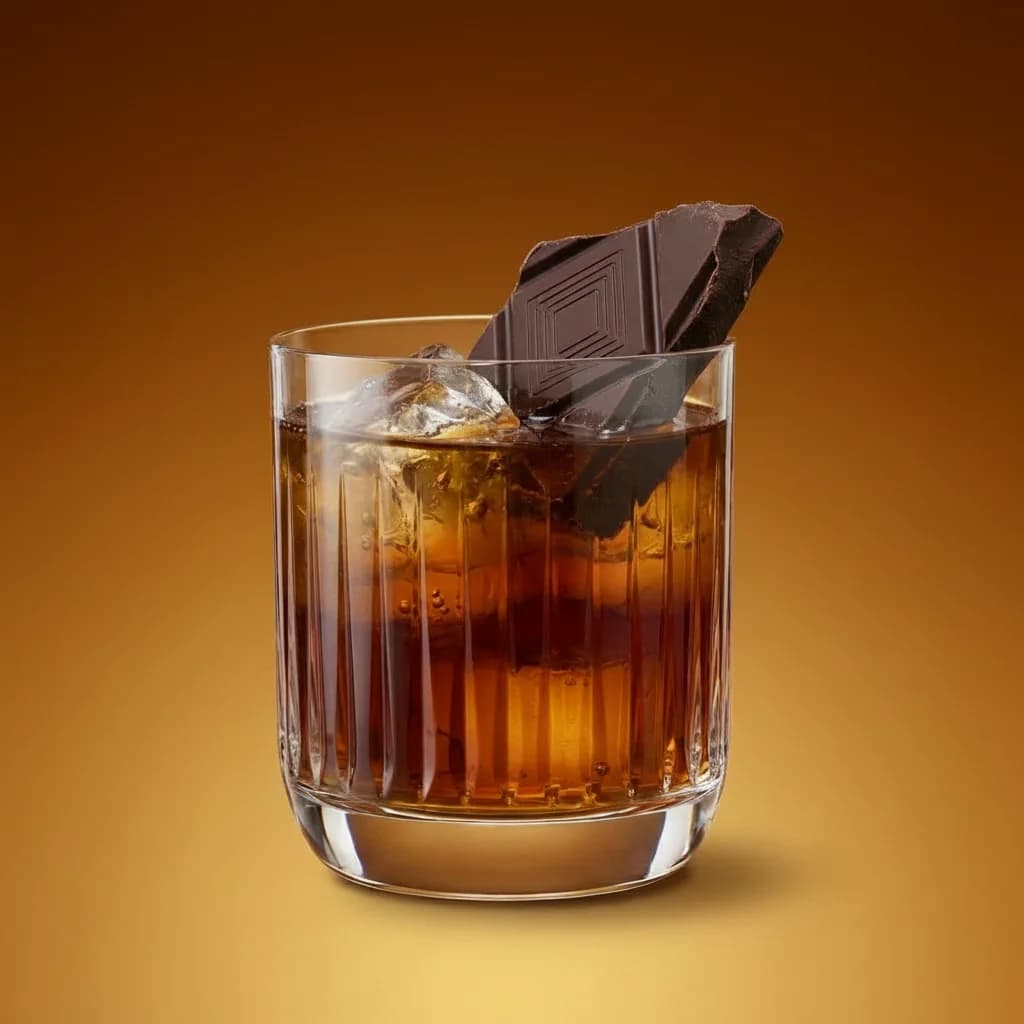
Cherry bourbon is a flavored spirit built on a bourbon whisky base with cherry — commonly black cherry — flavoring added.
ABV Typically around 40% ABV; US flavored spirits carry a legal minimum of 30% ABV.
Cherry aroma, often the darker black-cherry note, sits over the grain and charred-oak backbone of bourbon, with a sweetened body and a warm, spirit-forward finish.
Poured as a base measure in stirred or built drinks, it delivers both the whiskey spine and the cherry accent in one pour; because it is commonly sweetened, it contributes sugar as well as spirit and will make a build noticeably sweeter than a dry bourbon, so sweeter components are dialed back to compensate.
No single bottle replaces it: a workable stand-in pairs a bourbon or whiskey base with a cherry element (cherry flavoring or a cherry-flavored spirit), preserving both the grain-and-oak backbone at full strength and the defining cherry aroma. Plain bourbon alone loses the cherry, and a cherry liqueur alone drops the whiskey backbone and lowers the strength; any missing sweetness can be topped up with simple syrup.
Straight/plain bourbon contains no added flavoring or sweetening and carries the taste and character of the grain and barrel alone; cherry bourbon is a flavored spirit built on a bourbon base with cherry flavoring (and usually sugar) added, and cannot legally be called simply 'bourbon'.
A cherry liqueur is defined by its flavoring and high sugar with a spirit base that need not be whisky, whereas cherry bourbon is a bourbon-based flavored spirit designated by its bourbon base.
The base is bourbon whisky, made in the United States from a mash of at least 51% corn, distilled to no more than 160 proof and stored in charred new oak. Because bourbon may not legally contain added flavoring, adding cherry removes the product from the bourbon standard of identity and classes it as a flavored spirit designated by base plus predominant flavor; the flavored product is usually sweetened as well.
The bourbon base belongs to the American whiskey tradition, legally required to be produced in the United States; the flavored version falls under the US flavored-spirits standard, which designates such products by base spirit plus predominant flavor.