Cocktails with Green grapes
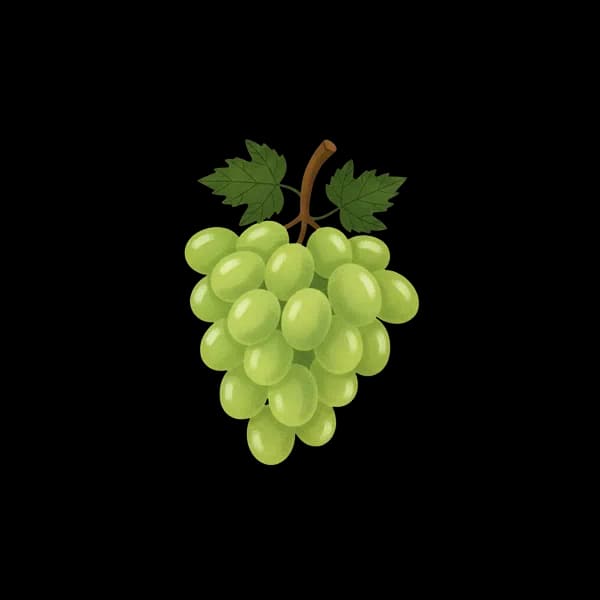
Green grapes are ordinary white table grapes — sweet, juicy and mild, with thin skins and very little tannin.
How it's used
Seven or eight grapes is the usual measure, and recipes here run from four to twelve. Muddled, they give fresh grape sweetness and a light acidity, which is why they turn up in sours and smashes beside gin, vodka, pisco and white wine. Press gently: table grapes are usually seedless, but hard muddling still tears skin into the drink, and grape tannin reads as astringency, drying the finish rather than adding bitterness.
Substitutes for Green grapes
Red or black grapes work one for one but tint a pale drink pink when muddled. White grape juice works at about 30 ml per 10 grapes, about what they would yield. The juice is about as sweet, but the drink loses the crushed-fruit texture. Avoid American Concord-type grapes: their foxy, candy-like aroma takes over.
Red and black grapes
The same European species, Vitis vinifera, with colored skins; the taste is close, but the skins bleed color into a pale drink.
White grape juice
Pressed and filtered, about 14 g of sugar per 100 g of juice, close to the fruit's 15–16 g.
Storage
A week or two in the fridge, rinsed just before use. They fail from the stem end first, so check where the berry meets the stalk, not the far side.