Cocktails with Red chili pepper
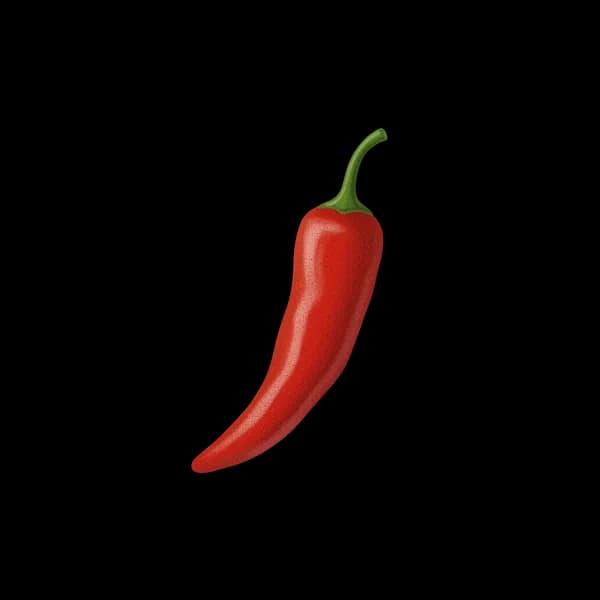
Red chili pepper is the pungent, ripened fruit of the chili plant, its heat coming from capsaicin.
Substitutes for Red chili pepper
A pinch of dried chili flakes gives the burn without the fresh fruit note, or use two dashes of hot sauce and expect vinegar and salt with it. Fresh chili is the honest answer, since varieties differ more than they look. Anything bottled brings vinegar and salt with the heat, and anything dried brings heat with no fruit at all.
Often confused with
Bell pepper
Bell peppers belong to the same genus and carry no capsaicin at all, so they give vegetal sweetness and color and no heat whatsoever. Use them where the recipe wants the pepper flavor without the burn. It is its own ingredient, not a milder chili — muddle it in and the drink simply has no bite.
Black pepper
An unrelated plant whose bite comes from piperine. It shares the English word and nothing else, and the two behave differently in a drink: piperine hits immediately, capsaicin builds.
Storage
Fresh chilies keep a week refrigerated and go soft before they go bad. They freeze whole and slice from frozen. Dried keeps for months and the heat outlasts the aroma.