Cocktails with Brut Champagne
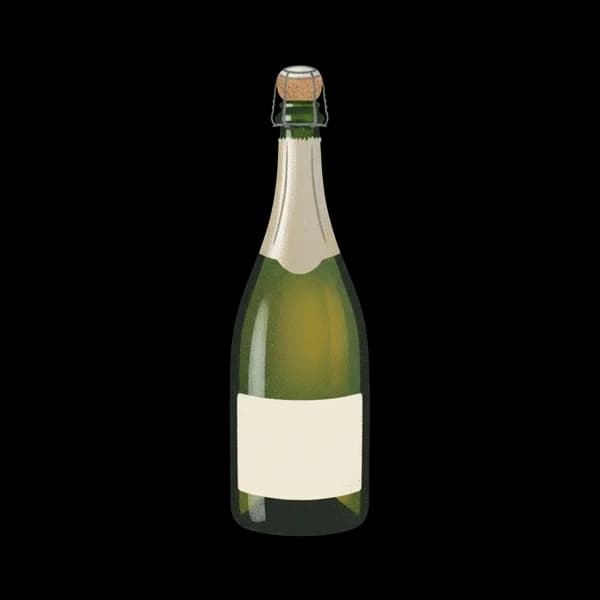
Brut Champagne is a dry sparkling wine from the Champagne region of France, made fizzy by a second fermentation in the bottle.
ABV11–13%
Substitutes for Brut Champagne
Any dry sparkling wine does the job one for one, and the variable to watch is sugar: labels run from bone dry to noticeably sweet under names that do not say so plainly. Taste the bottle before you build, and correct with syrup half a barspoon at a time if it comes out drier than the drink wants.
On the label
- “brut”, “extra dry”, “sec”
- The names run backwards. By the EU dosage bands: brut nature under 3 g of sugar per liter, extra brut 0–6, brut under 12, extra dry 12–17, sec 17–32, demi-sec 32–50, doux over 50. So a bottle marked extra dry is SWEETER than one marked brut.
Often confused with
Tank-method, not bottle-fermented, and the sweetness scales do not line up — "extra dry" sits sweeter than "brut". Pour it into a recipe balanced for brut and the drink comes out sweeter than intended.
Sparkling wine (generic)
Only Champagne may carry the name, and everything else — including traditional-method wines — is sold under another. In a drink the difference is usually depth rather than sweetness, so the balance holds and the finish shortens.