Cocktails with Filter coffee
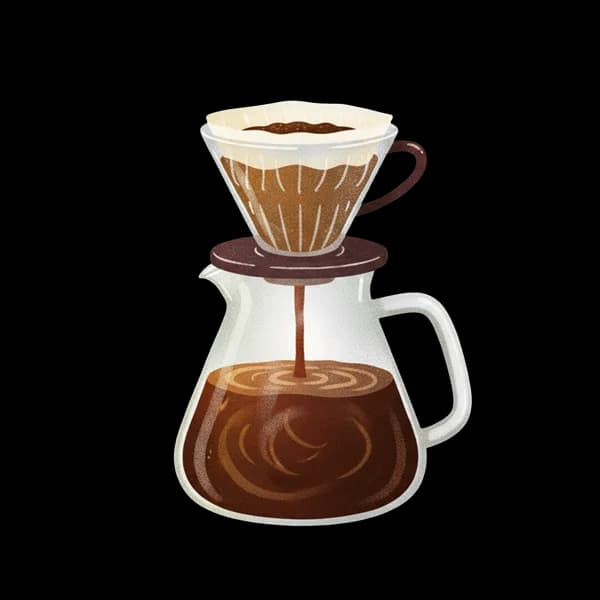
Filter coffee is coffee brewed by gravity, letting hot water pass once through ground roast in a paper, metal or cloth filter.
Substitutes for Filter coffee
Volume with roast and body, and the strength of the brew is the variable — a weak one lengthens a drink and a strong one seasons it. Anything more concentrated needs cutting with water to fill the same measure.
Often confused with
Espresso
Espresso is concentrated several times over: the same measure makes the drink markedly stronger in coffee and more bitter. Cut it with water about one to three to stand in for filter, or the coffee runs over everything else.
Cold brew steeps for hours in cold water and comes out softer and less acidic; filter coffee is brewed hot in minutes and gives a brighter acidity. In an espresso martini the cold brew reads rounder and needs less sugar.
Storage
Best used freshly brewed — held hot it turns stale and bitter within an hour or so.