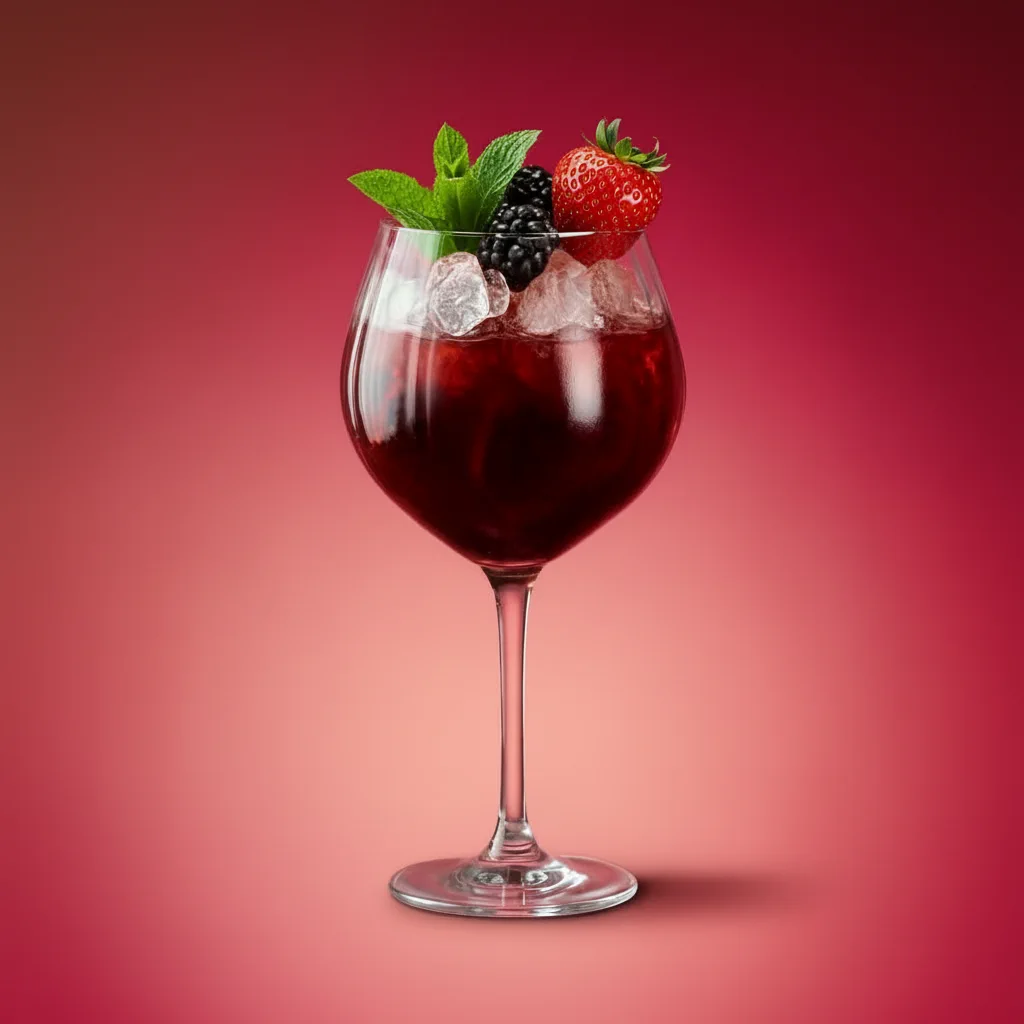
Cocktails with Red wine
Red wine is a still, unfortified wine made by fermenting red- or black-skinned grapes on their skins to draw out color and tannin.
ABV12–15%
Substitutes for Red wine
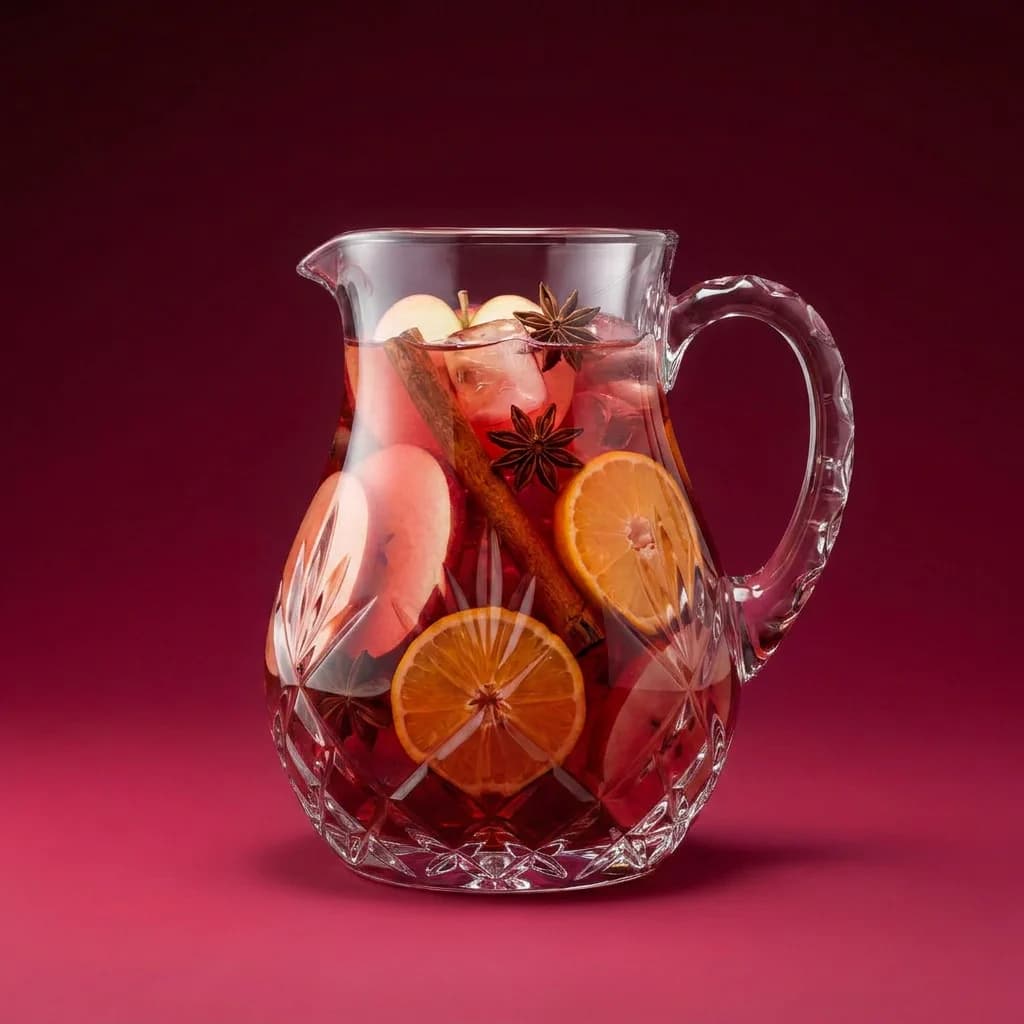
Color, tannin and dry wine character all at once, and a substitute usually drops the tannin — which is what gives a wine drink its grip. As a top or an accent the swap is easy; as the base of a sangria it is the drink itself.
Often confused with
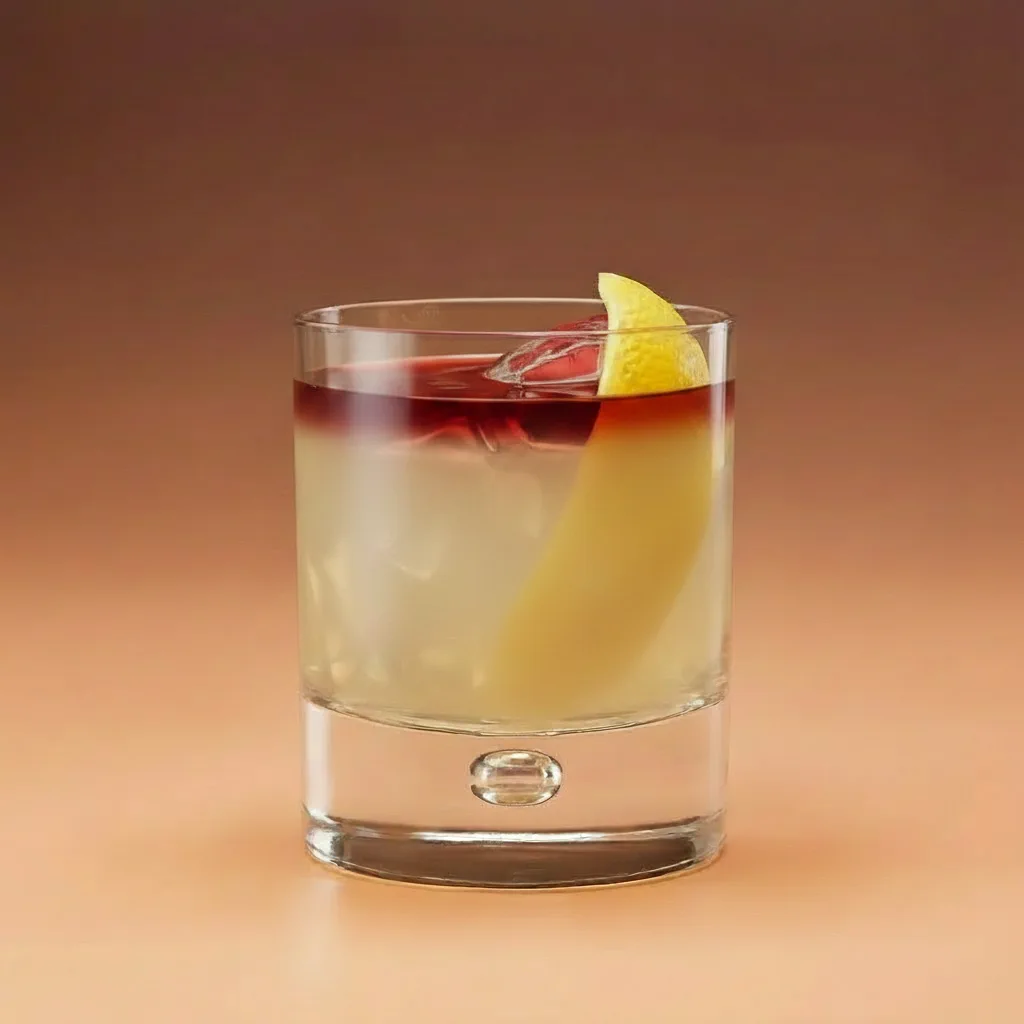
Red is fermented on the skins of dark grapes, which is where its color and tannin come from; white is usually pressed off the skins first. In a sangria or a New York Sour that tannin is what holds the drink together, and white leaves it sweet and loose.
Fortified wine (e.g. port)
Added spirit lifts it to 18–20% and leaves the sugar in. In sangria or a wine punch the swap makes the drink both stronger and distinctly sweeter: pour about half the measure and drop the sugar.
Storage
Once opened it oxidizes and loses fruit aroma; keep it corked, refrigerated and use within a few days.