Nelsons Blood
A berry and sweet cocktail ∙ Stir ∙ 3 min ∙ 26.1% ABV ∙
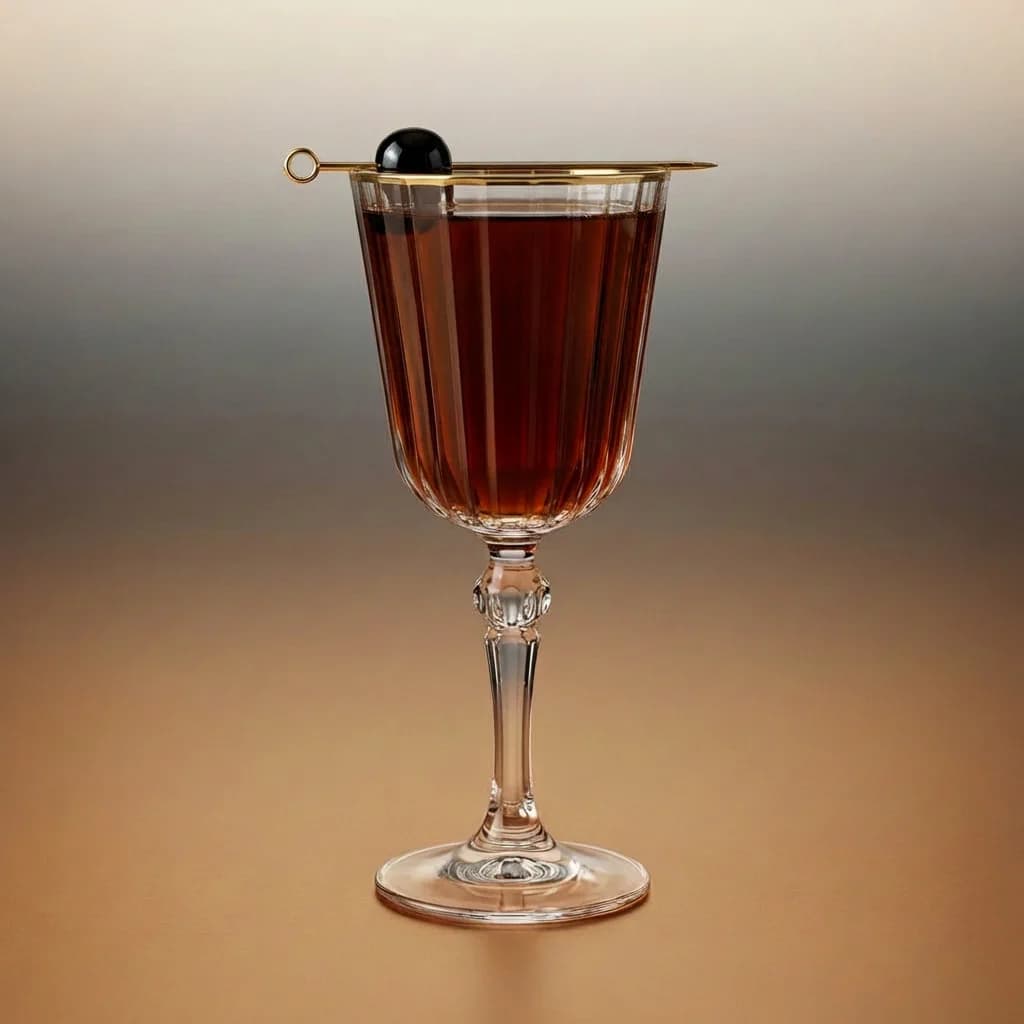
Nelson's Blood is a two-ingredient stirred cocktail of equal parts Cognac and ruby port, served up with a lemon twist. Grape-forward, brandy warmth folding into port's dark-fruit sweetness before a bright lemon oil lifts the finish.
Ingredients
1
Servings

Garnish

Instructions for 1 serving
- Pre-chill a glass
- Stir all ingredients with ice: Cognac 45 mlRuby port 45 ml
- Fine strain into the chilled glass
- Express a lemon twist over the cocktail and use as garnish
History
Nelson's Blood takes its name from a piece of 19th-century naval folklore. After Vice Admiral Horatio Nelson was killed at the Battle of Trafalgar in 1805, his body was preserved in a cask of brandy for the voyage home to England, and legend holds that sailors secretly drank from the cask along the way, giving brandy (and, in some tellings, rum) the nickname "Nelson's blood." Word-history researchers note that the related phrase "tapping the Admiral," for illicitly sipping liquor from a cask through a straw, was already in print as early as 1790, well before Trafalgar, meaning the drinking legend was likely grafted onto Nelson's story after the fact rather than originating with it.
The cocktail that borrowed this nickname as its name is a simple pairing of cognac and ruby port, and it became a fixture of traditional British pubs, but no source identifies who first combined the two or when. It is documented mainly as an established, anonymously created pub drink rather than a bartender's invention.
FAQ
What is Nelson's Blood?
Nelson's Blood is a stirred cocktail made from equal parts Cognac and ruby port, strained up into a chilled glass and finished with an expressed lemon twist. It is a simple, spirit-forward sipper built from just two ingredients, at about 26% ABV.
Why is it called Nelson's Blood?
The name references a legend that sailors aboard HMS Victory drank the rum from the cask preserving Admiral Horatio Nelson's body after his death at the Battle of Trafalgar, giving rise to "Nelson's Blood" as slang for rum in the Royal Navy. The cocktail borrows that evocative nickname rather than using rum itself.
Why is rum called Nelson's Blood?
Rum earned the nickname "Nelson's Blood" from the tale that Admiral Nelson's body was preserved in a cask of spirit for the voyage home after Trafalgar, and that sailors later tapped it for a drink. The phrase stuck as slang for rum in British naval tradition, even though this cocktail is made with Cognac and port, not rum.