Cocktails with Lime juice
Lime juice is the sour, acidic juice squeezed from fresh limes, used as the souring citrus in countless cocktails.
How it's used
The sour backbone of the daiquiri, the margarita and most of tiki. It is about as acidic as lemon, so what you are choosing is the aroma: lime is greener, sharper and more resinous. Squeeze it fresh — lime aroma falls off faster than lemon and a jug juiced at opening is noticeably duller by the evening. One lime gives roughly 30 ml, so a sour takes a whole one.
Substitutes for Lime juice
Fresh lemon juice is the best substitute, in the same amount. Lemon is about as acidic as lime, so the sugar in the recipe stays as it is. The drink comes out softer, without the sharp edge and faint bitterness of lime. The difference shows most where lime is the lead flavor, as in a Daiquiri or a Margarita. Where lime only sharpens cola or ginger beer, the swap barely registers. Unsweetened bottled lime juice is the fallback, again one for one. It is fine in a highball, but a Daiquiri made with it tastes flat. Orange and grapefruit juice will not work: grapefruit has about half the acid, orange a fifth or less.
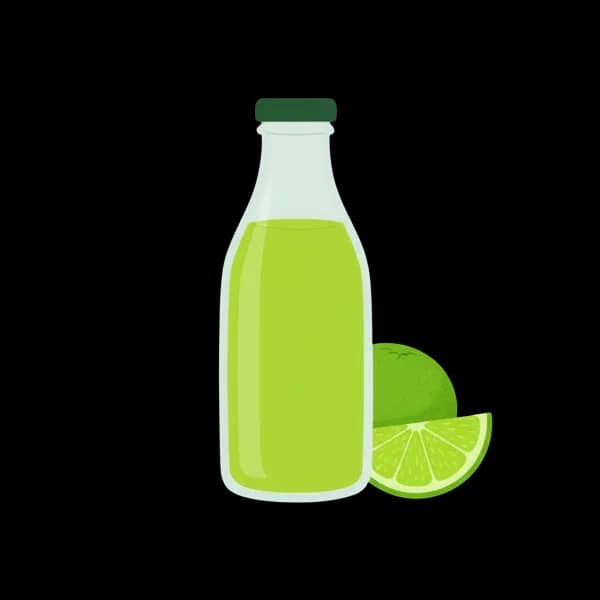
Bottled lime juice
Pasteurized or chemically preserved: the acid survives, the fresh aroma does not, and a bitter note often takes its place. If the label lists sugar, it is a lime cordial, and the drink will need less syrup.
Key lime
Smaller and more floral than the usual lime, with more seeds. Its juice works one for one, but the fruit is small, so you'll need several per drink.