Manhattan
A dry and bitter whiskey cocktail ∙ Stir ∙ 3 min ∙ 29.5% ABV ∙
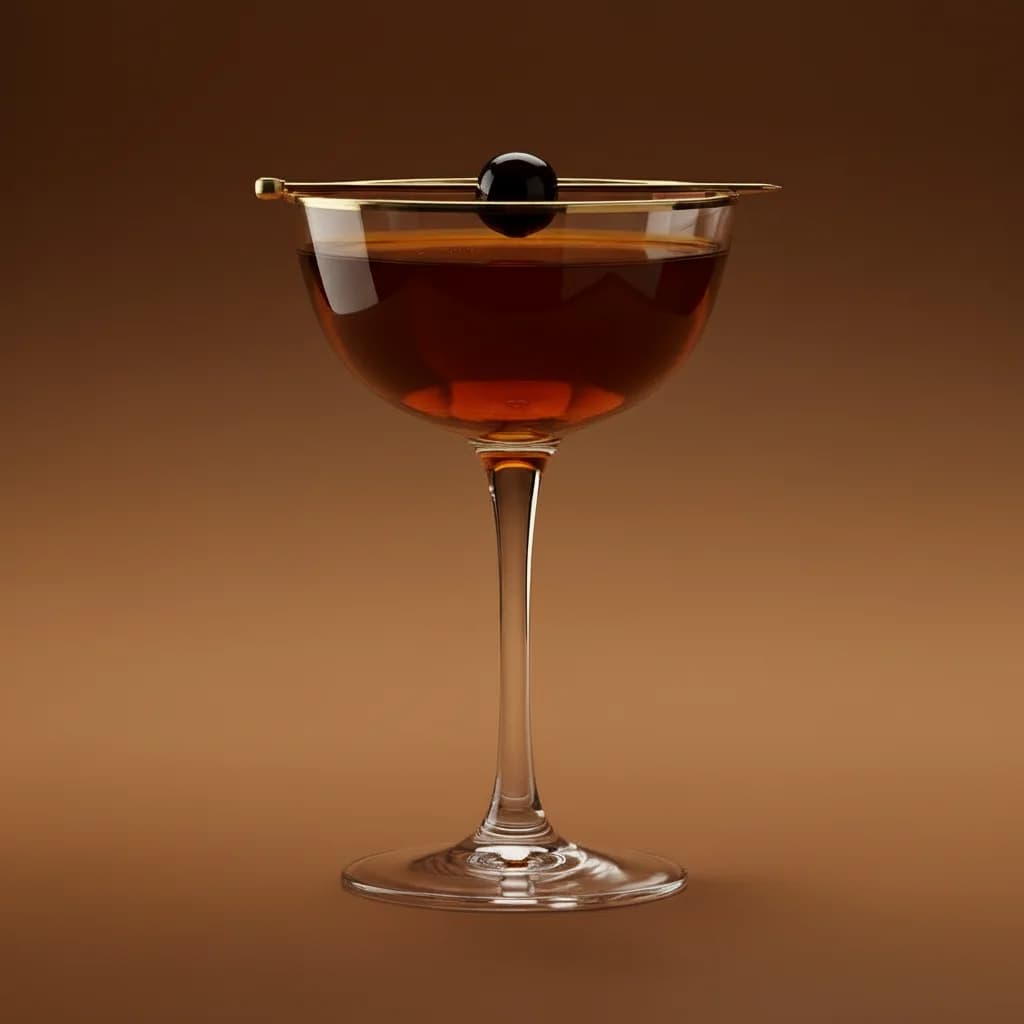
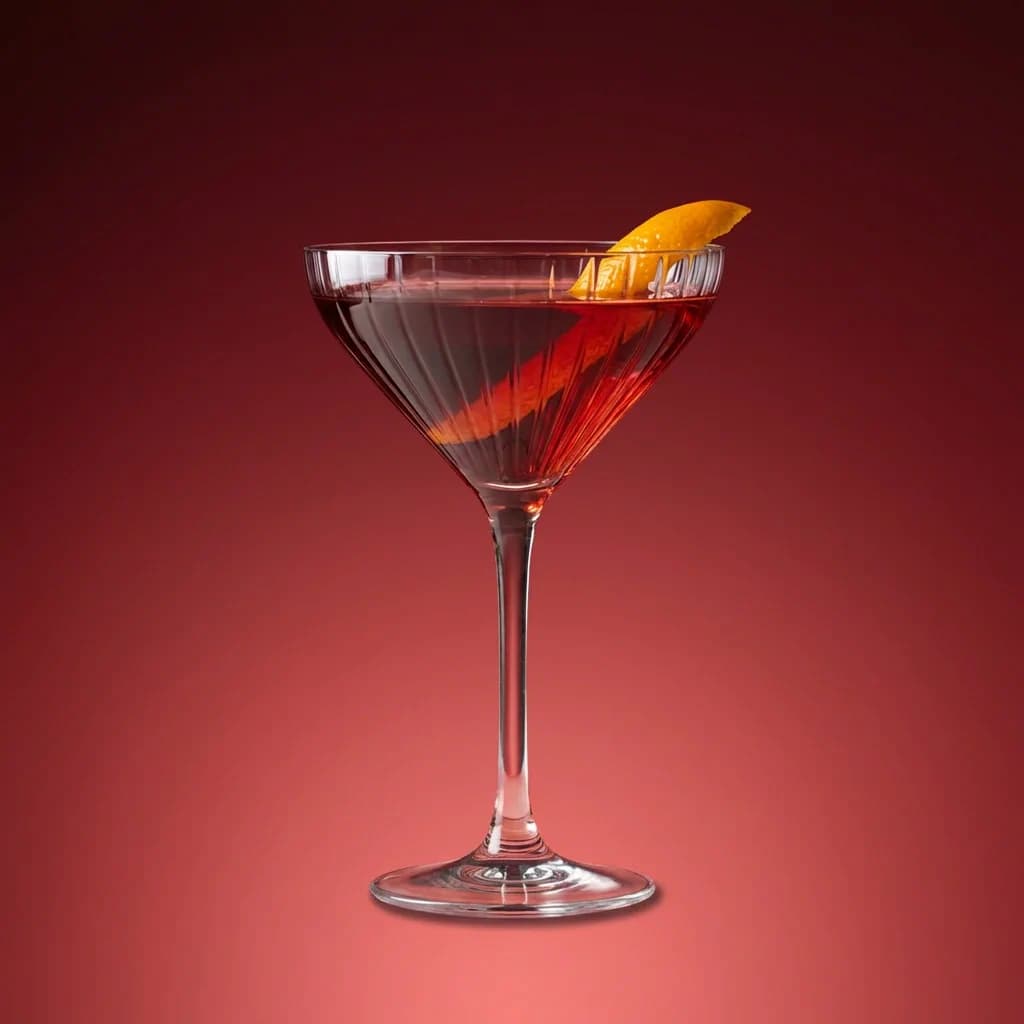
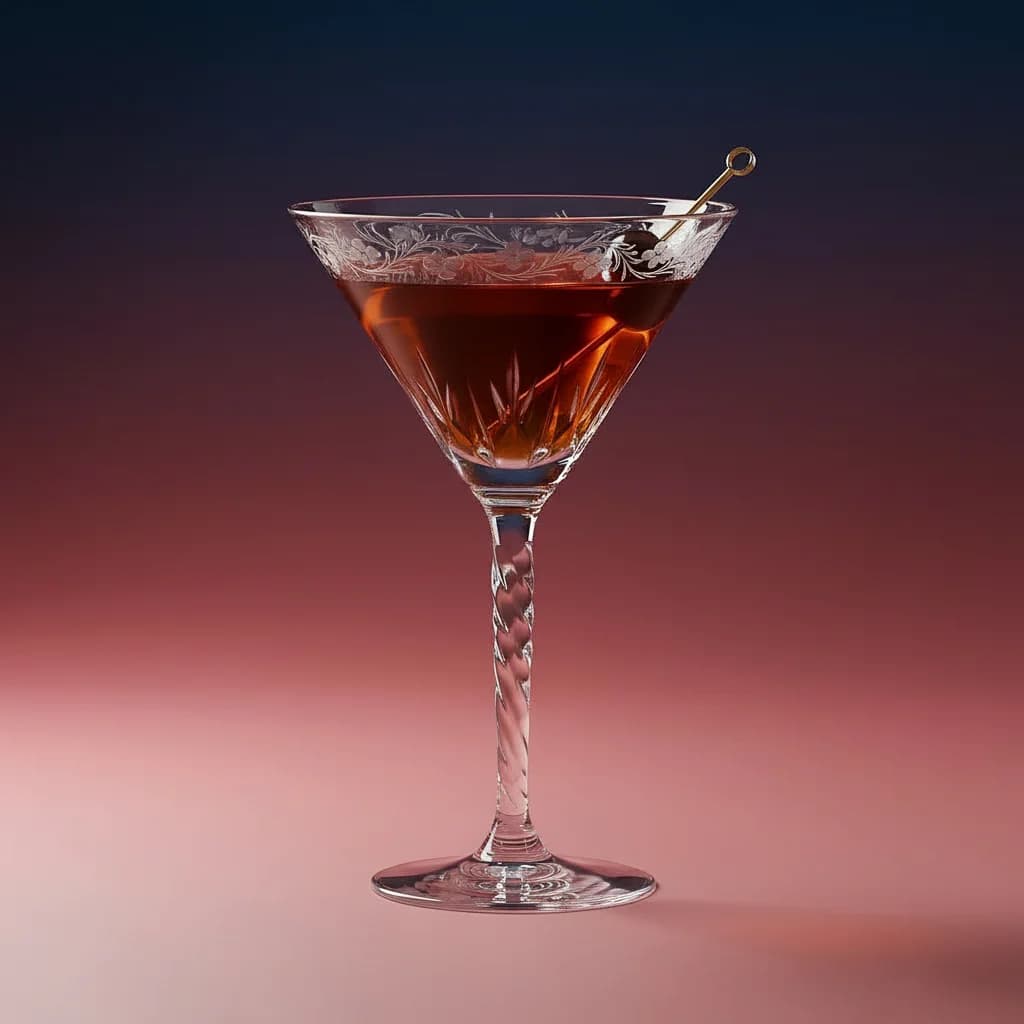
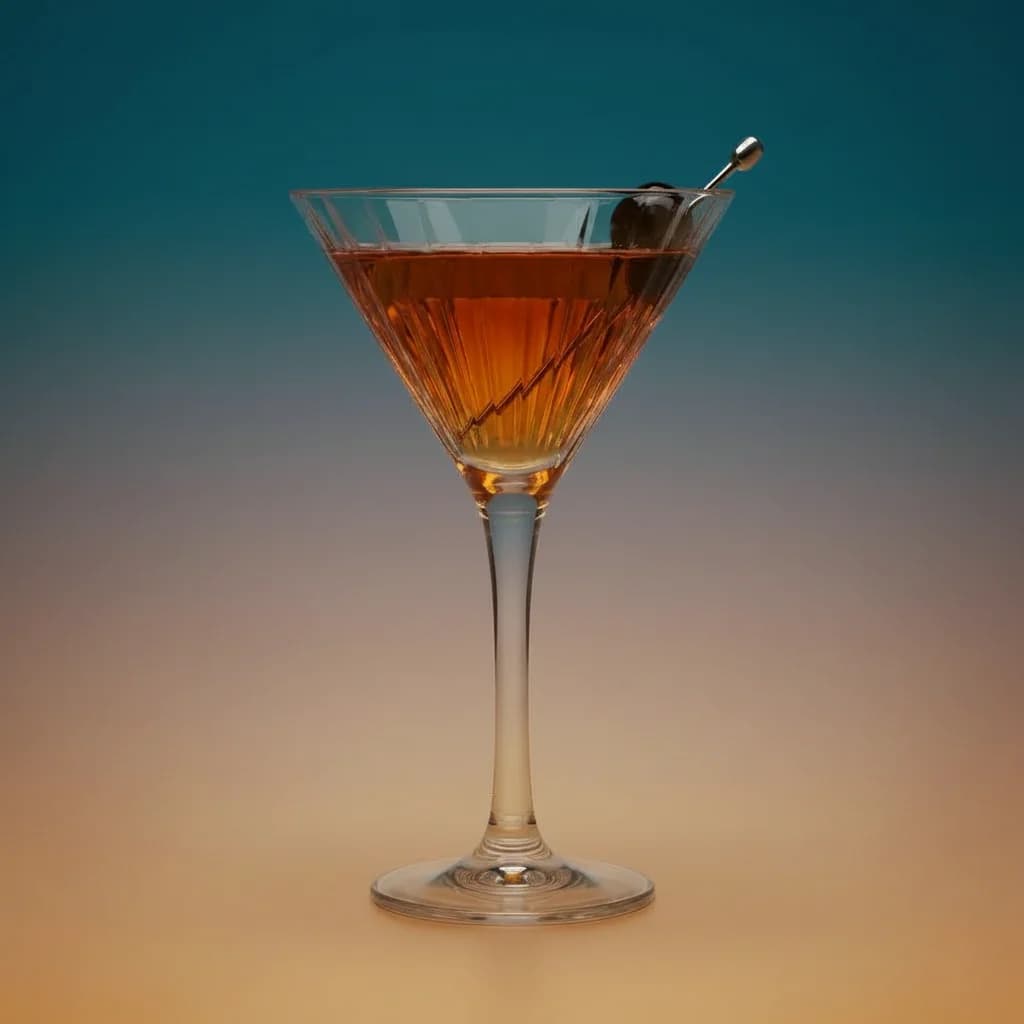
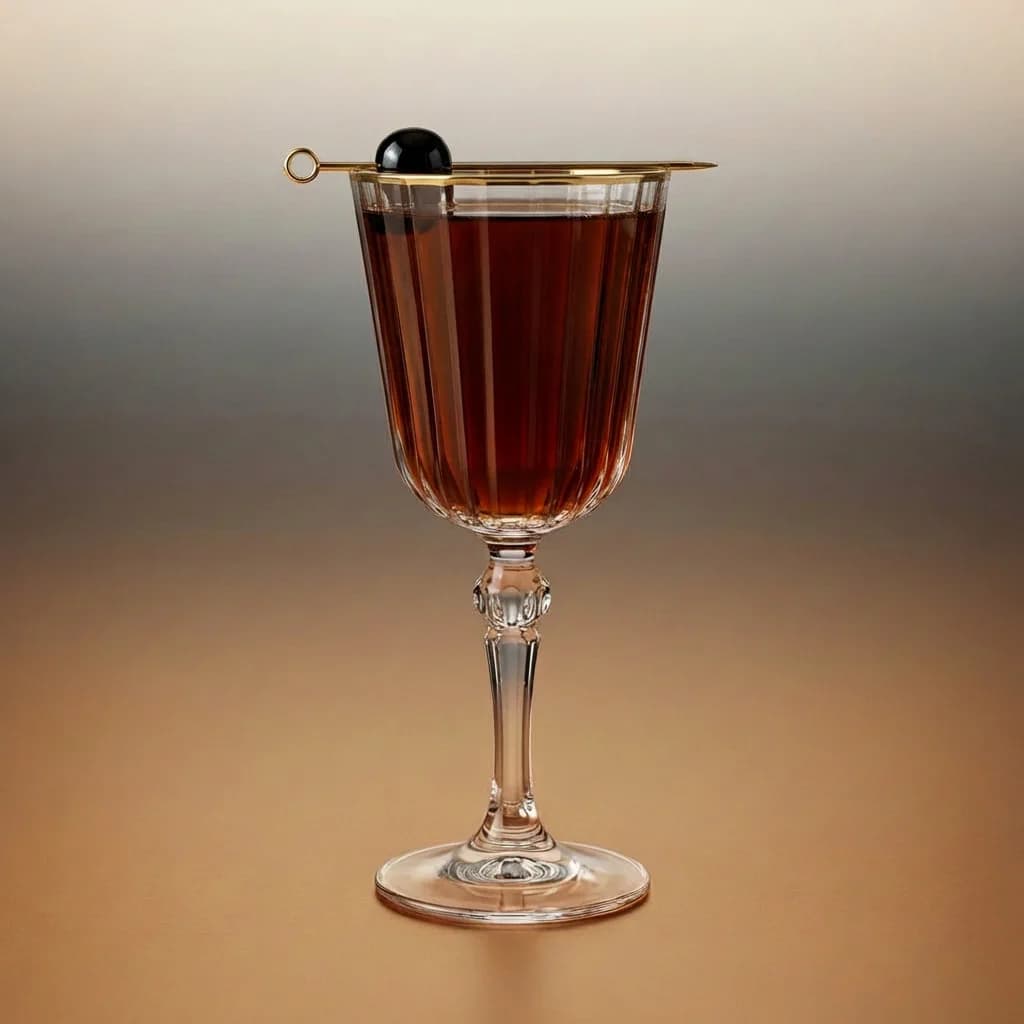
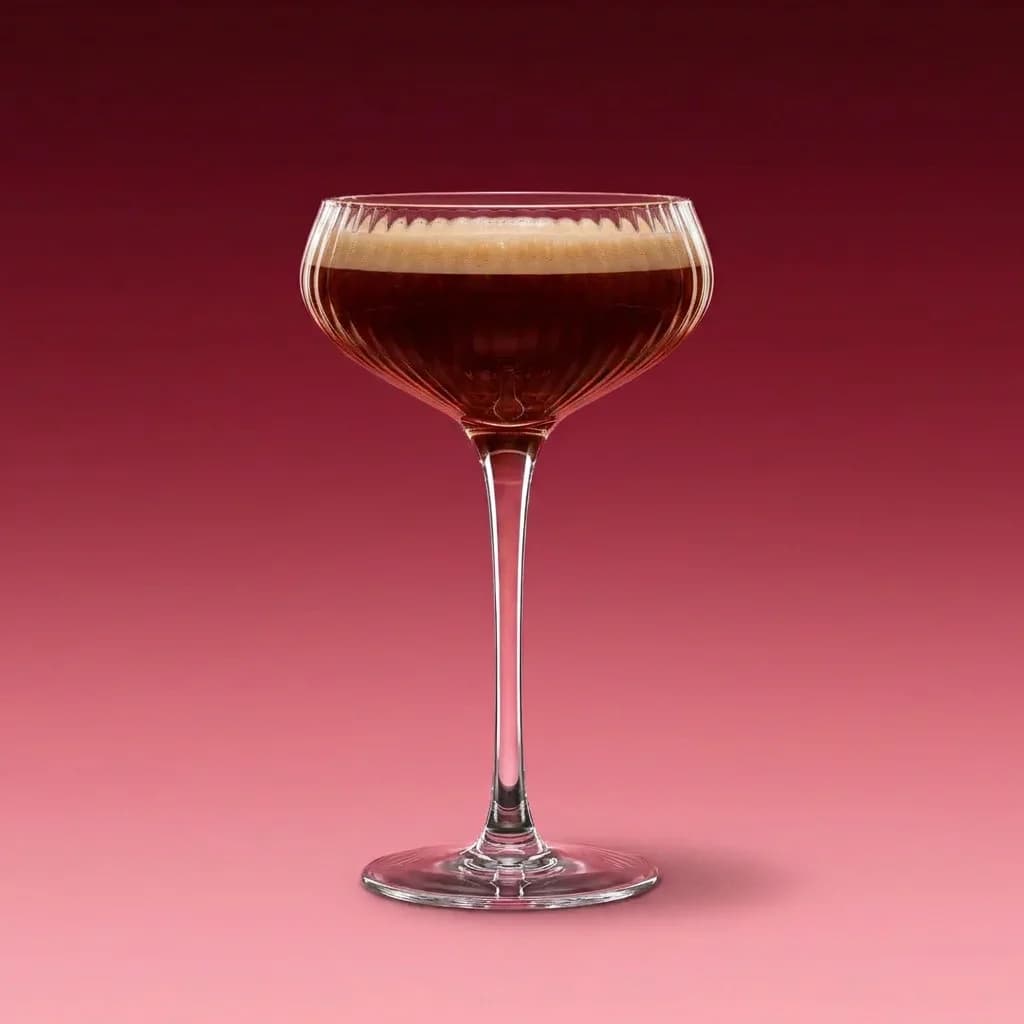
The Manhattan is a historic IBA classic built on rye whiskey, sweet vermouth, and aromatic bitters, stirred and served up in a chilled cocktail glass. Warm rye spice leads, the vermouth folding in a raisined sweetness before a dry, bitters-laced finish lingers on the back of the tongue.
Ingredients
1
Servings
Garnish
Instructions for 1 serving
- Pre-chill a glass
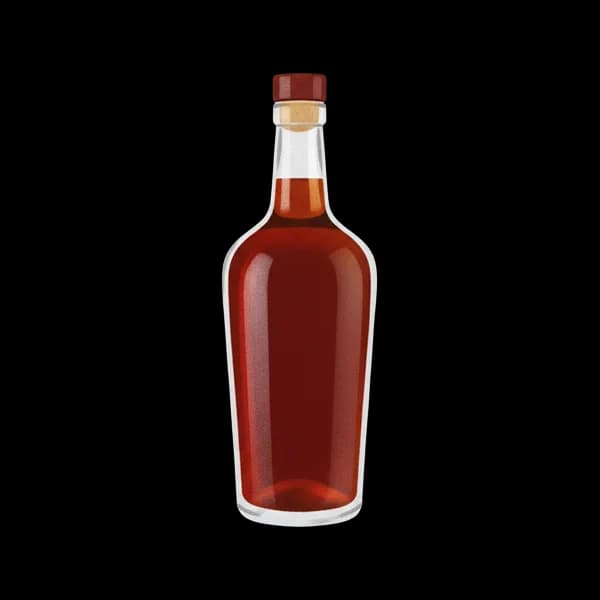
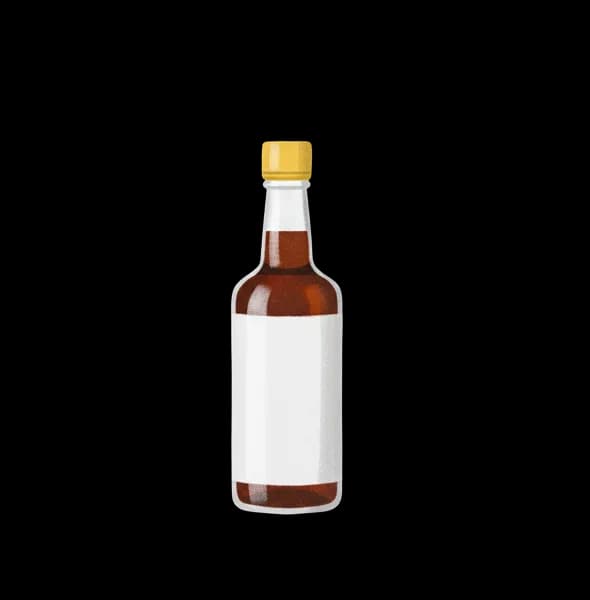
- Stir all ingredients with ice: Rye whiskey 50 mlRosso vermouth 20 mlAngostura aromatic bitters 1 dash
- Strain into the chilled cocktail glass
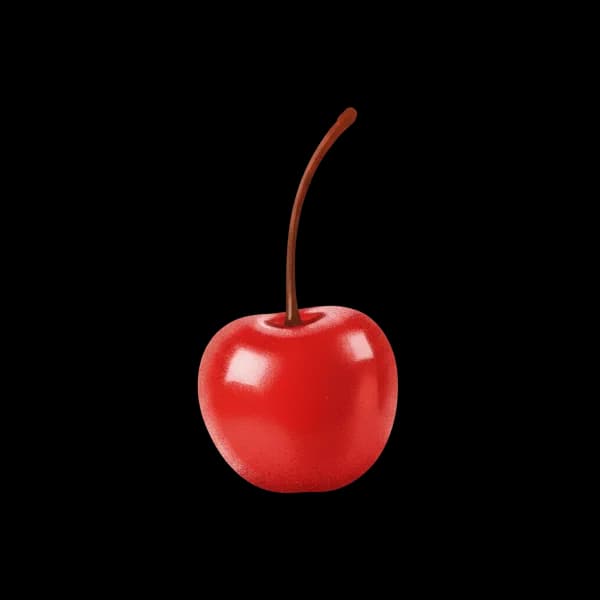
- Garnish with a maraschino cherry
Tips
- Stir for around 30 seconds over ice so the drink chills and dilutes fully.
History
The Manhattan is widely regarded as one of the first modern cocktails, emerging in New York City in the 1870s or early 1880s. Its exact origin is disputed. A popular legend credits a bartender named Iain Marshall with creating the drink at the Manhattan Club for a banquet hosted by Jennie Jerome, Lady Randolph Churchill and mother of Winston Churchill, celebrating Samuel J. Tilden's election as New York governor in 1874; this story is generally discounted because Lady Randolph had just given birth to Winston in England weeks earlier and was still there, attending his christening only two days before the banquet supposedly took place in New York.
A version considered more credible by most cocktail historians comes from William F. Mulhall, a bartender at New York's Hoffman House, who recounted in a 1923 account that the drink was invented in the 1860s by a man named Black who ran a bar on Broadway near Houston Street; research into period records has tied this figure to a George Black who operated a bar at that address in the 1870s. A separate account attributes the drink to Colonel Joe Walker, who is said to have mixed whiskey and Italian vermouth aboard a yacht near New York before popularizing the combination at his saloon in New Orleans.
The earliest known written references to a cocktail called the Manhattan, made with whiskey, vermouth, and bitters, appeared in 1882, with detailed recipes published in 1884 in Charlie Paul's American and Other Drinks and O.H. Byron's The Modern Bartender's Guide.
FAQ
What are the ingredients in a Manhattan?
Rye whiskey, sweet (rosso) vermouth, and a dash of aromatic bitters, stirred with ice and strained into a chilled glass with a maraschino cherry. It is served up, with no ice in the glass itself.
How do you make an awesome Manhattan?
Stir rye whiskey, sweet vermouth, and a dash of aromatic bitters with plenty of ice for about 30 seconds, then strain into a pre-chilled cocktail glass and garnish with a maraschino cherry. The keys are a full 30-second stir for proper dilution, a well-chilled glass so the drink does not warm on contact, and measuring the vermouth rather than eyeballing it.
What are common mistakes when making a Manhattan?
The most common mistakes are under-stirring, which leaves the drink too strong and thin, and over-pouring the vermouth, which buries the rye. Skipping the pre-chilled glass is another: a room-temperature glass warms the drink the moment it is poured, dulling the aroma.
What is the difference between an Old Fashioned and a Manhattan?
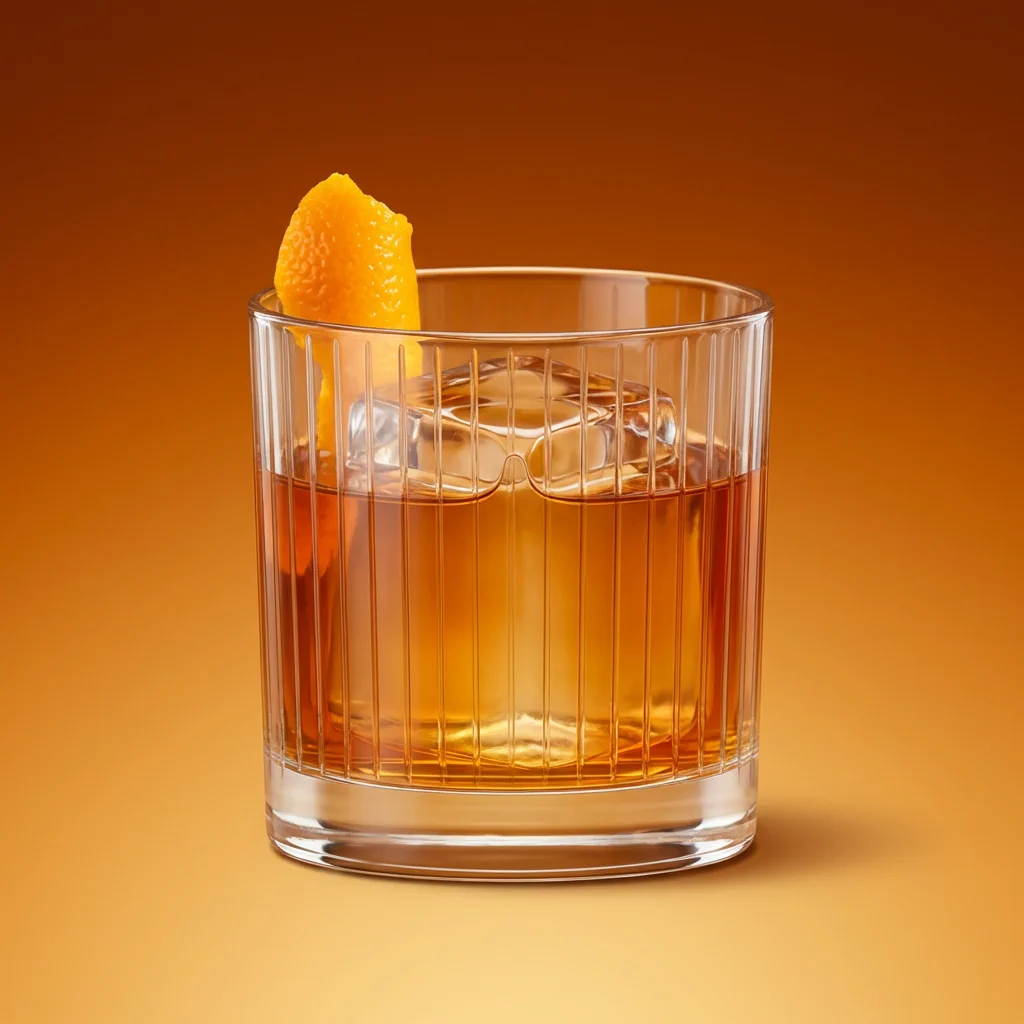
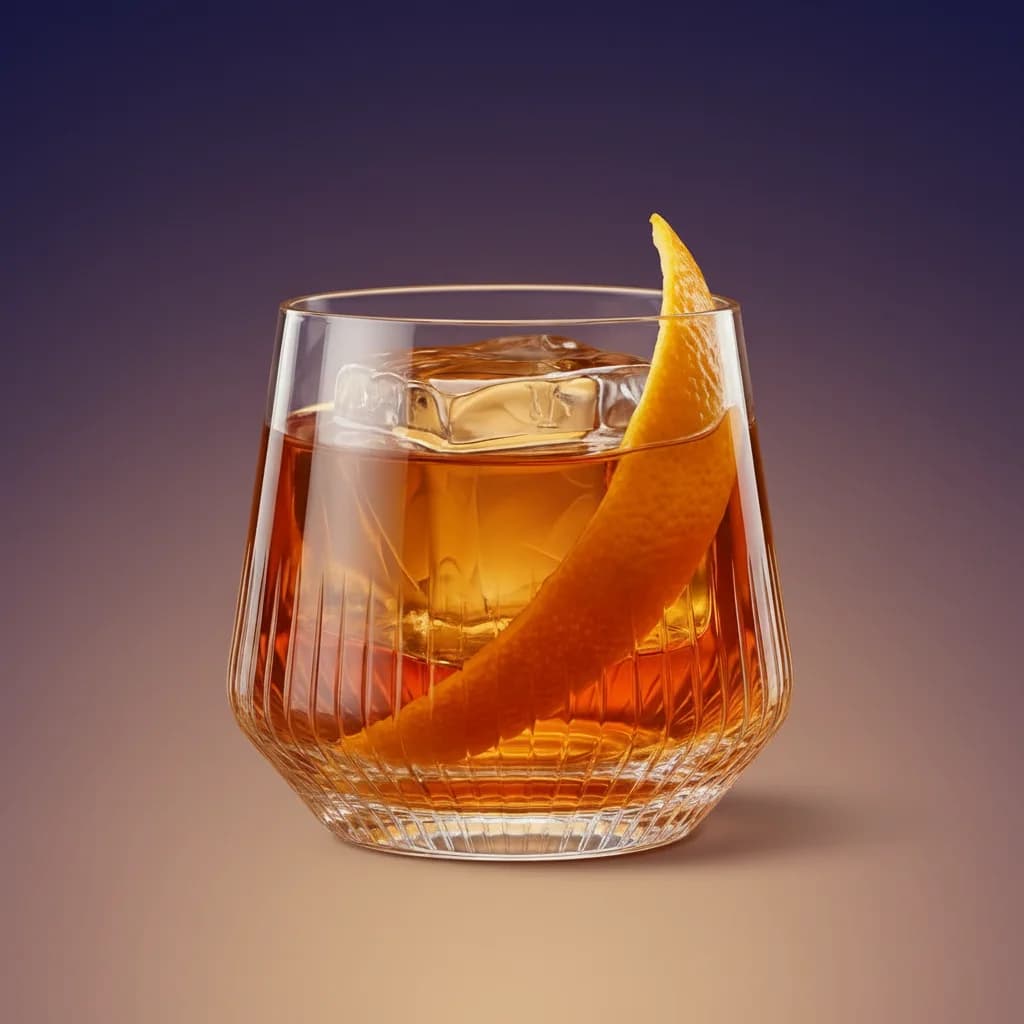
An Old Fashioned is whiskey, sugar, and bitters built over ice with no vermouth, while a Manhattan is whiskey stirred with sweet vermouth and bitters, then strained up with no ice in the glass. The vermouth gives the Manhattan a rounder, wine-like sweetness that the Old Fashioned's straight sugar and whiskey do not have.
What glass is a Manhattan served in?
A cocktail glass, served up with no ice, since the drink is stirred and strained rather than built over ice.