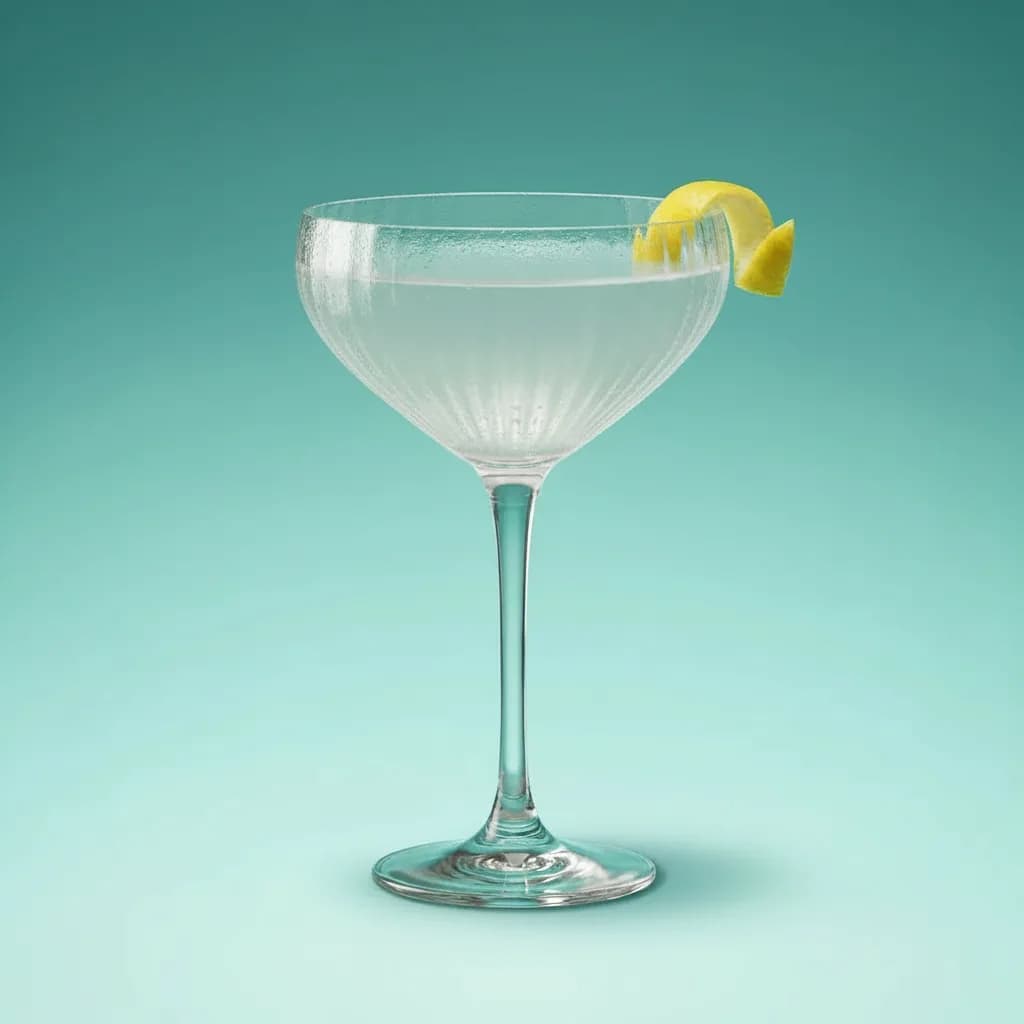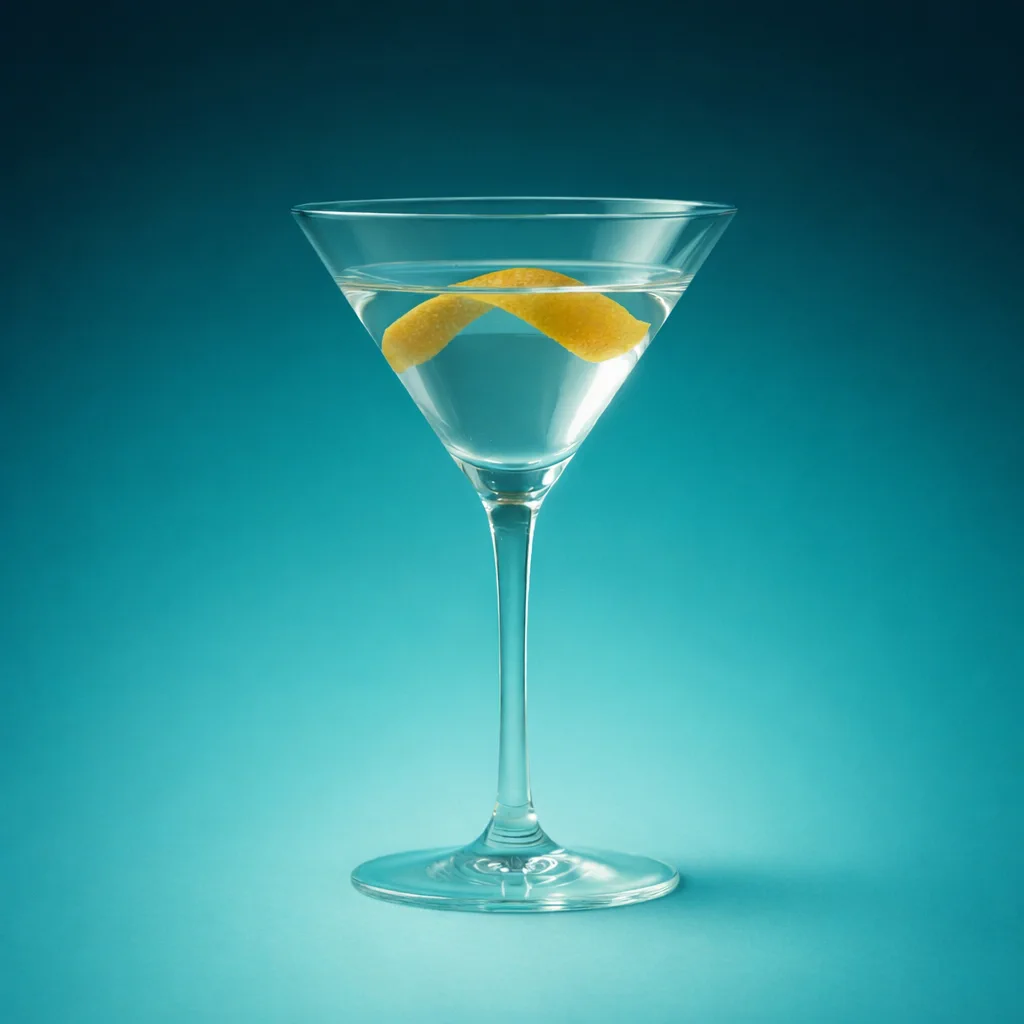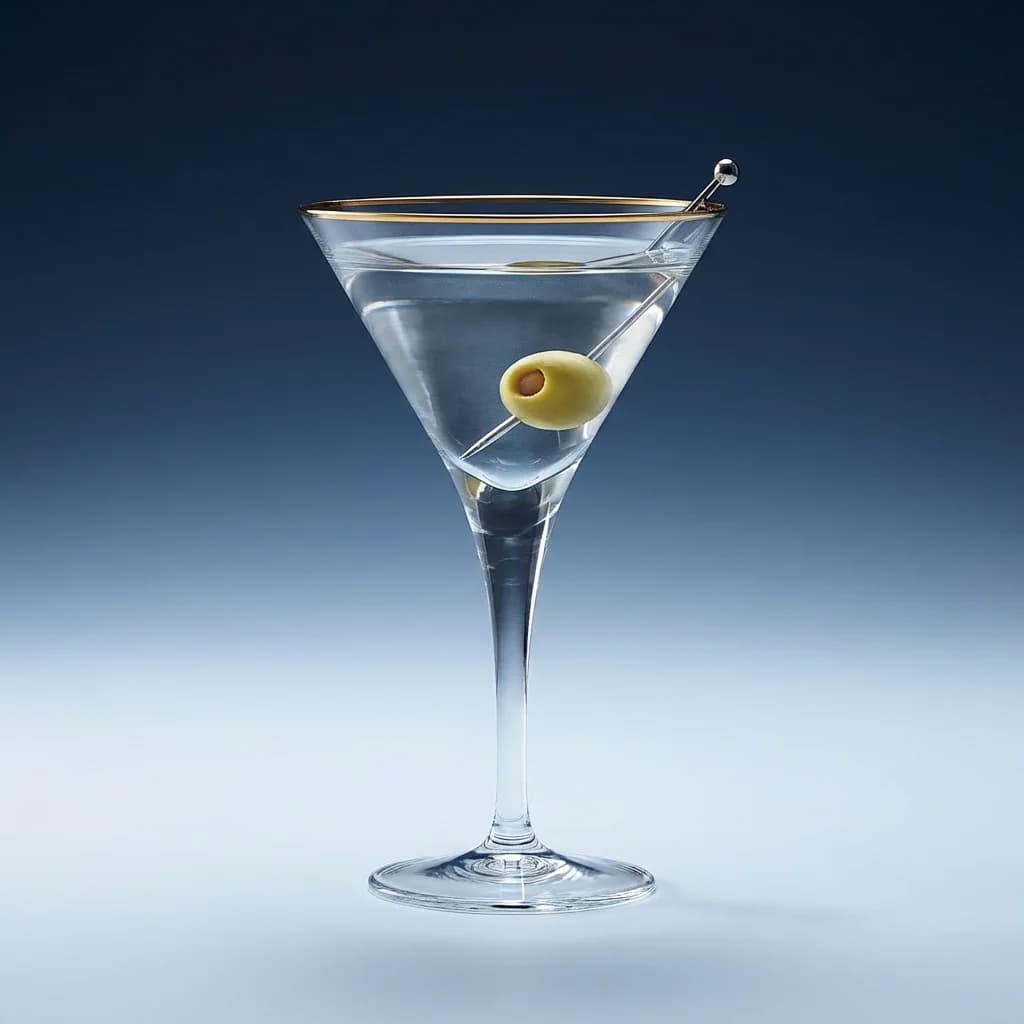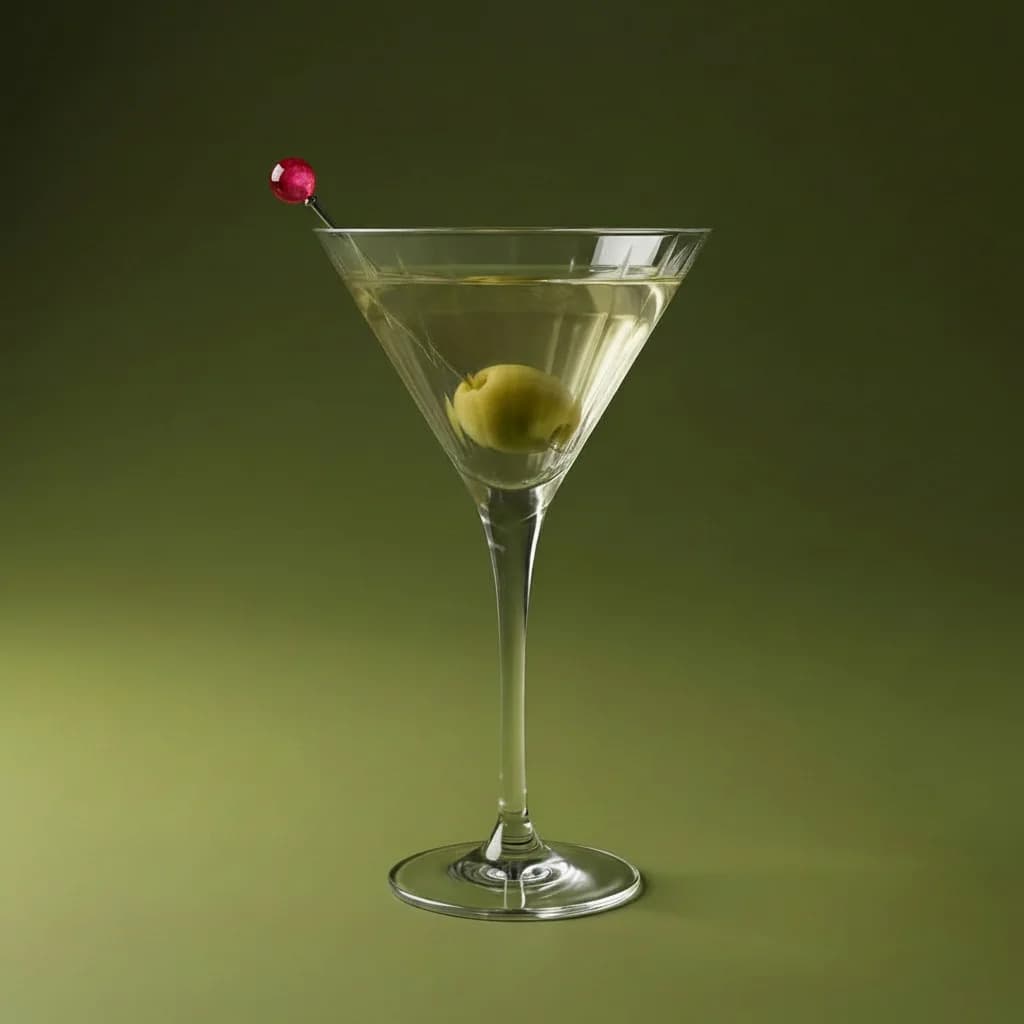
Dry Martini 5:1
Stir ∙ 3 min ∙ 36.4% ABV ∙
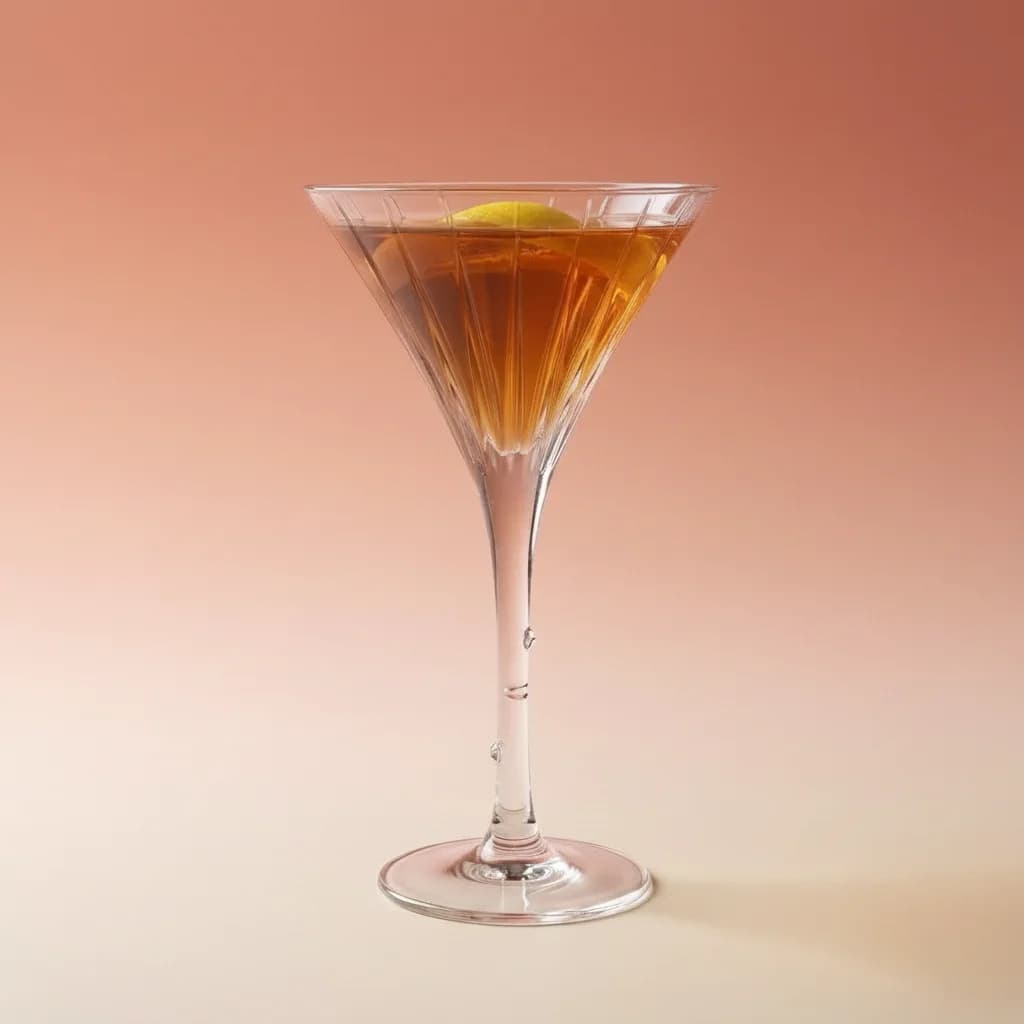
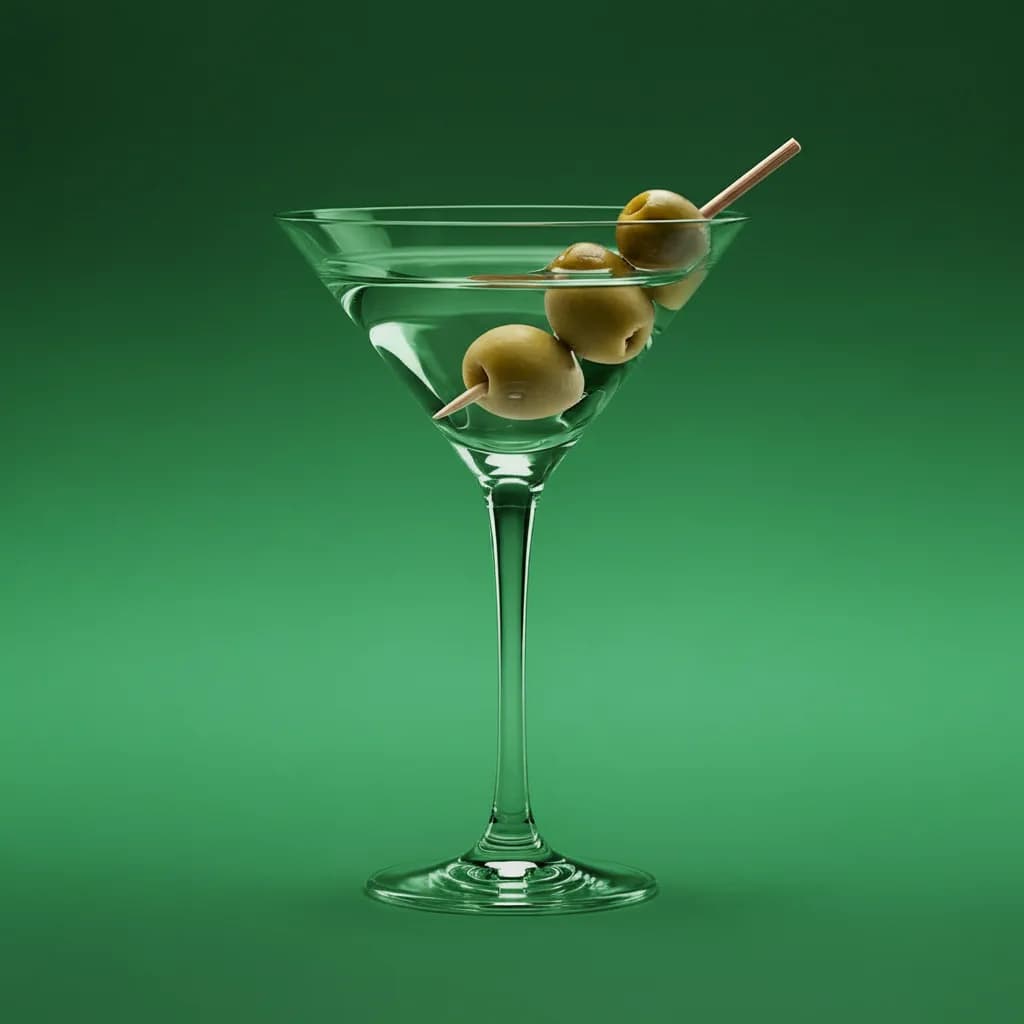
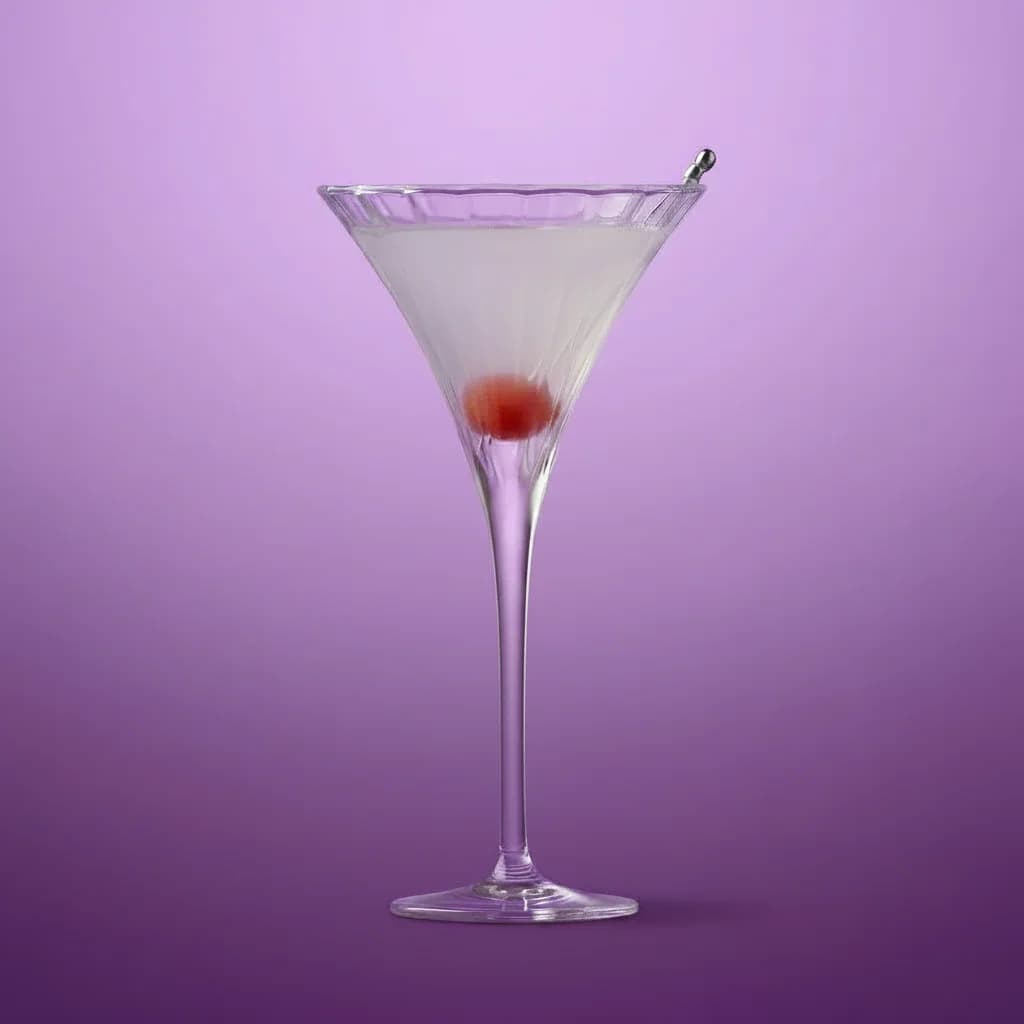
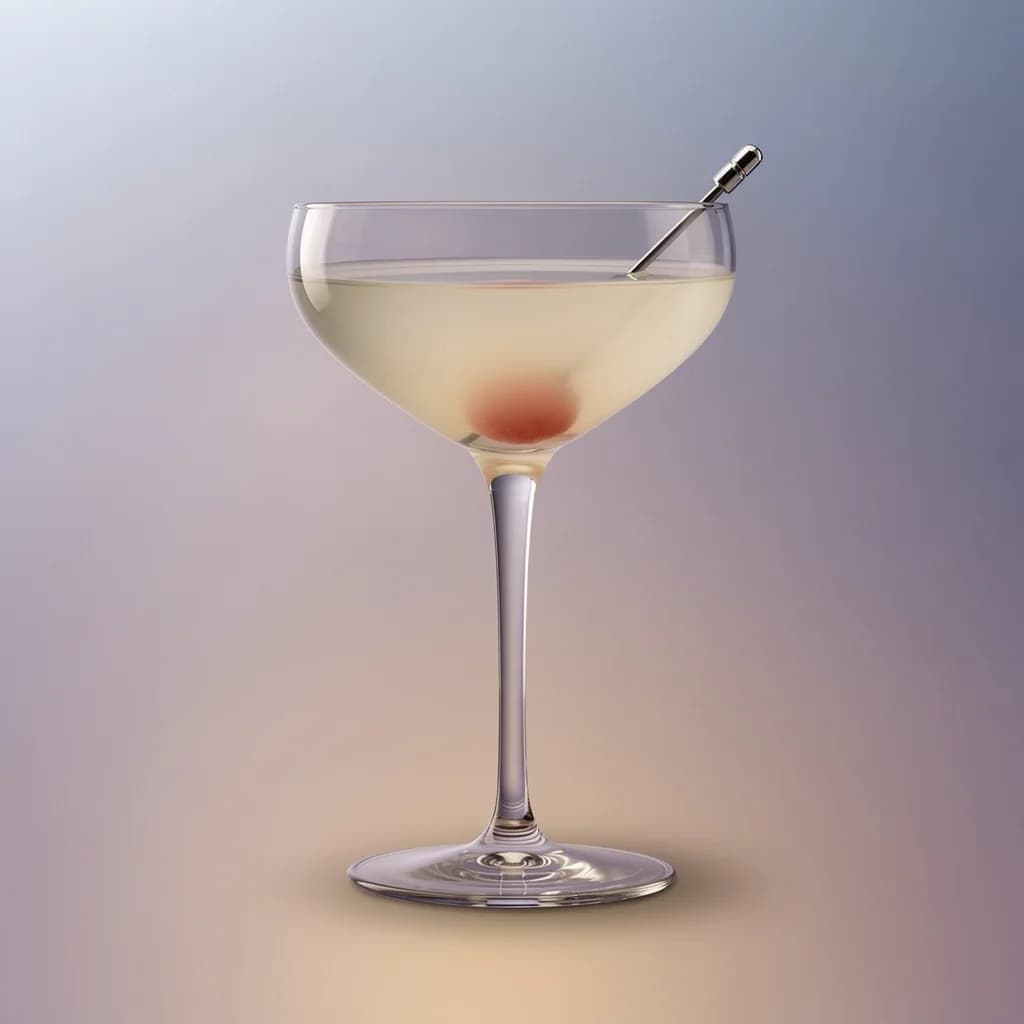
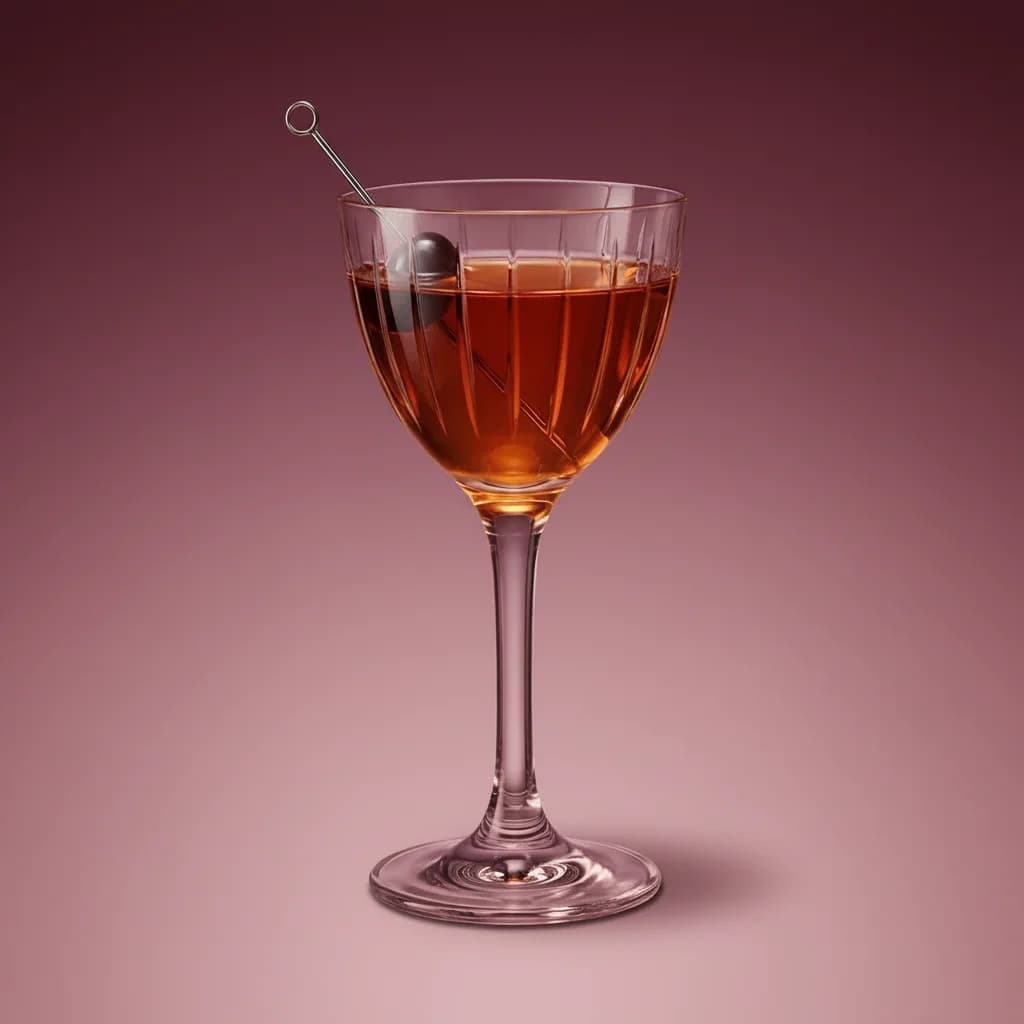
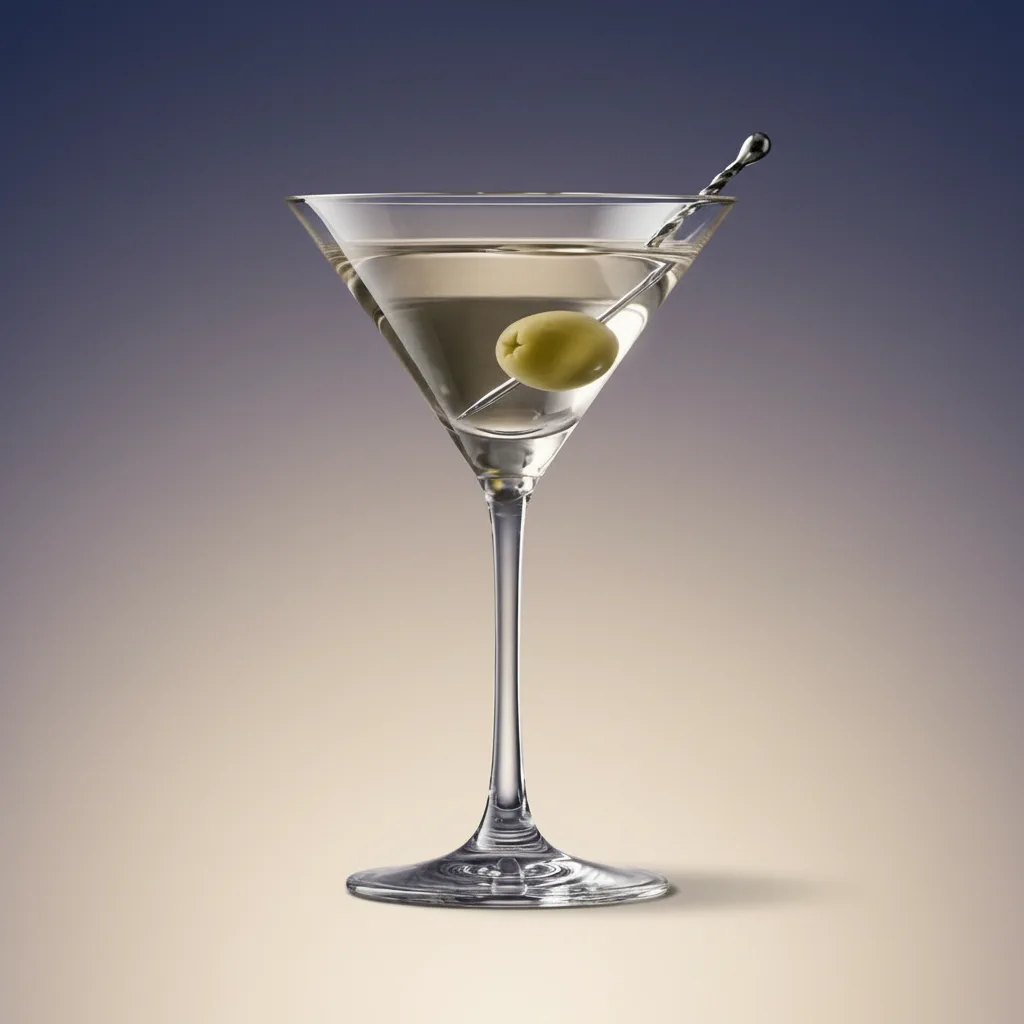
The Dry Martini 5:1 is a stirred spirit-forward cocktail of London dry gin and dry vermouth in a 5:1 ratio, finished with an olive. Cold and juniper-forward with a faint herbal trace of vermouth, tightening to a clean, faintly salty finish from the olive — best sipped slowly as an aperitif.
Ingredients
1
Servings
Garnish
Instructions for 1 serving
- Pre-chill a glass
- Stir all ingredients with ice: London dry gin 50 mlDry vermouth 10 ml
- Strain into the chilled glass
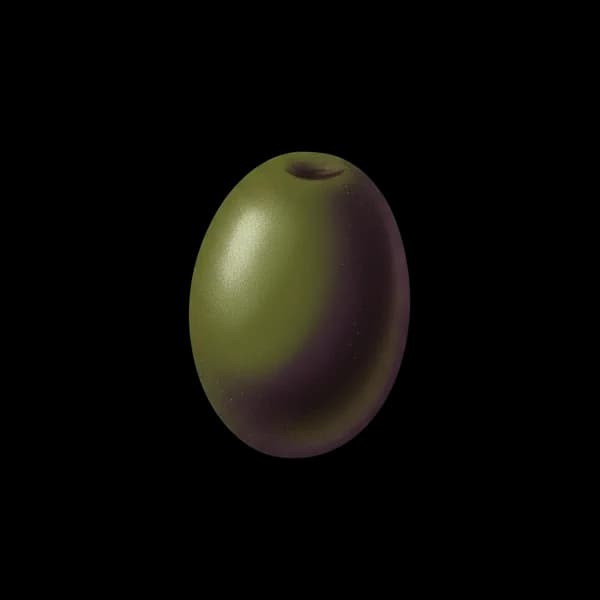
- Garnish with an olive
Tips
- Stir the gin and vermouth with large cubes for about 30 seconds until the mixing glass feels ice-cold, never shake, to avoid excess dilution and air bubbles.
- Measure the 5:1 ratio precisely; too much vermouth muddies the crisp, spirit-forward profile this ratio is meant to deliver.
- Express the olive's brine sparingly or rinse it before dropping it in, so the garnish doesn't overpower the delicate vermouth notes.
History
The Dry Martini 5:1 is a variation of the Martini, whose own origin is contested among several rival theories — tracing it to the 1860s Martinez cocktail in California, to a 1911 Knickerbocker Hotel bartender (though print evidence of dry Martini recipes predates that story by several years), or simply to Martini & Rossi's vermouth branding. By 1922 the Martini had settled into a widely recognized 2:1 gin-to-vermouth ratio, and the drink grew progressively drier across the 20th century — 3:1 by the 1930s, 4:1 by the 1940s, and 5:1 or drier becoming common by its later decades.
This build reflects that 5:1 stage of the trend, producing a markedly drier, less vermouth-forward pour than the classic 2:1.
FAQ
What is a 5 to 1 ratio martini?
It means five parts gin to one part dry vermouth, a drier, more spirit-forward style than the classic equal-parts or 2:1 Martini. This build follows that 5:1 ratio, stirred and served up with an olive, so the gin leads and the vermouth adds only a light herbal backbone.
What is the perfect ratio for a dry martini?
There is no single correct ratio — it is a matter of personal preference, and dry Martinis have ranged historically from equal parts down to 15:1 or drier. This recipe uses 5:1, a common modern dry style that keeps the vermouth present but clearly secondary to the gin.
What is a 6 to 1 martini?
A 6:1 Martini uses six parts gin to one part dry vermouth, making it slightly drier than this 5:1 build. The difference is subtle in the glass; both styles are stirred, served up, and lean heavily on the gin, with only a trace of vermouth's herbal sweetness.
What is in a dry martini?
London dry gin and dry vermouth, stirred with ice and served up with an olive. This build uses a 5:1 ratio, favoring the gin heavily over the vermouth for a drier, more spirit-forward drink.
Is a dry martini shaken or stirred?
Stirred, not shaken. Stirring chills and dilutes the gin and vermouth without aerating or clouding the drink, keeping it clear and silky the way a Martini is meant to look and taste.